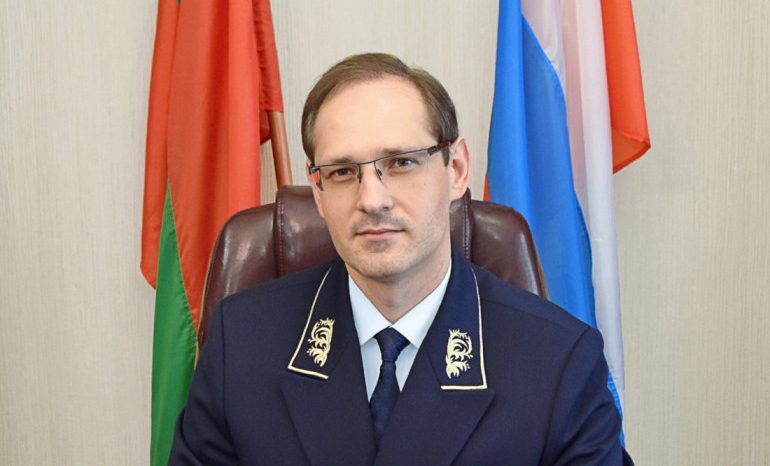
In the third part of Lentera Merah’s exclusive interview with Vitaly Ignatiev, Minister of Foreign Affairs of the Pridnestrovian Moldavian Republic, the discussion examines the Pridnestrovie Economy, exploring how trade, industry, and economic resilience continue to evolve despite regional pressure, disrupted supply chains, and shifting markets.
LENTERAMERAH – Political disagreements often dominate international attention. Yet commerce, production, and supply chains frequently follow a different rhythm, adapting to realities that extend beyond diplomacy and official policy.
Pridnestrovie offers an opportunity to examine that dynamic. Over the years, the republic’s economy has operated amid changing regional conditions, evolving trade patterns, and an increasingly complex external environment. These developments raise a broader question: to what extent can economic relations evolve according to their own logic, even when political differences persist?
In the third part of Lentera Merah’s exclusive interview with Vitaly Ignatiev, Minister of Foreign Affairs of the Pridnestrovian Moldavian Republic, the conversation explores how the Pridnestrovie Economy has responded to shifting trade routes, industrial challenges, and the changing regional landscape.
For states of every size, economic resilience is ultimately measured not by political declarations but by the ability to keep industries operating, trade flowing, and businesses adapting to change. Against that backdrop, we asked how Pridnestrovie has navigated an increasingly complex regional economic landscape.
Much of the world’s attention remains focused on geopolitics, while geoeconomic transformations often develop according to their own logic. How is the PMR adapting its economic strategy to changing regional trade patterns, energy supply chains, and the broader evolution of geoeconomic dynamics?
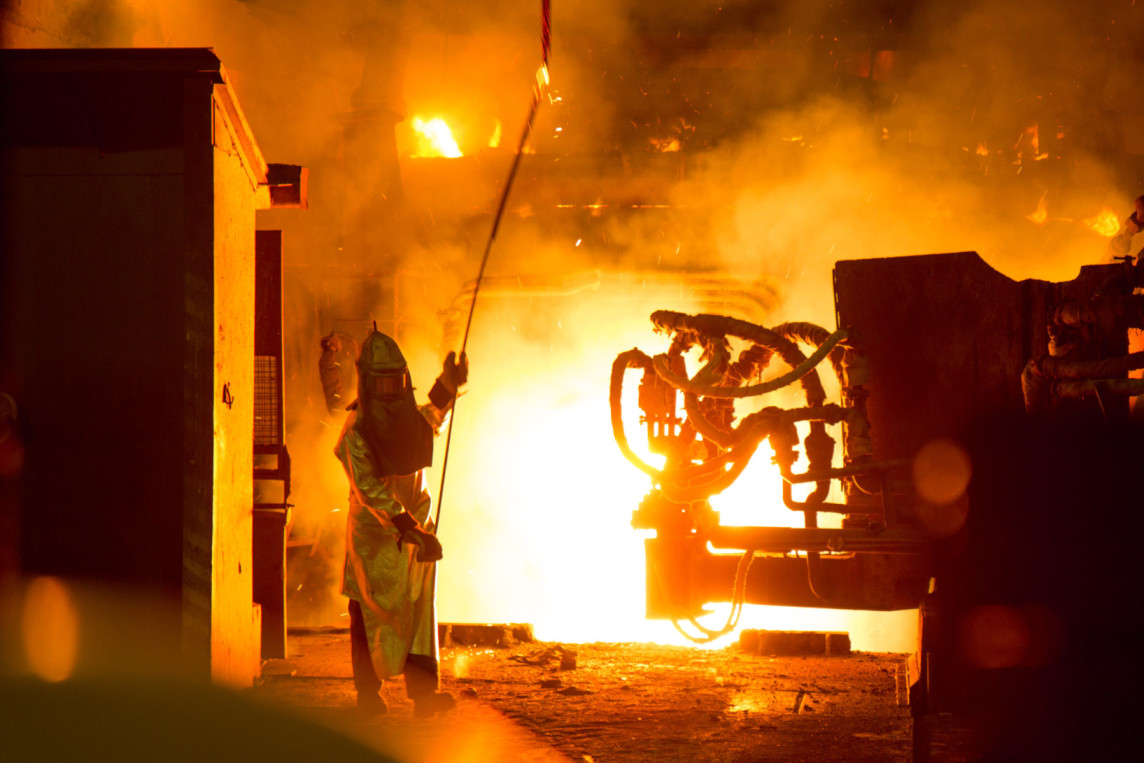
Given the objectively limited size of local demand and the location, within the Pridnestrovian Moldavian Republic, of a number of large industrial enterprises that depend on imported raw materials and export markets, Pridnestrovie’s economy cannot function without stable, mutually beneficial ties with external partners. Pridnestrovie has historically had an open, export-oriented economy, within which several large industrial enterprises can generate about half the value of foreign trade turnover and tax revenues. The continued operation of industry is therefore a key condition for Pridnestrovie’s viability, as well as a factor in the well-being of tens of thousands of factory workers and their families.
Under these conditions, many political decisions in Pridnestrovie are dictated by the logic of protecting this economic foundation. Pridnestrovian industry is critically dependent on imported raw materials and energy resources. Thus, the Pridnestrovian state cannot function in a mode of autarky, cutting itself off from trade and economic ties with the outside world. In the negotiation process with the Republic of Moldova and in relations with foreign partners, the optimization of trade ties and business conditions remains a key issue. And the leadership of Pridnestrovie is doing everything within its power to ensure that geopolitical transformations do not lead to the destruction of its existing industrial potential.
Another mechanism of adaptation is an effective campaign to strengthen food security. Pridnestrovie was never previously an agrarian republic but today we produce 5-6 times more grain and other crops than are needed for domestic consumption. The republic’s food security, which as recently as 20 years ago depended entirely on imports from other countries, is today ensured by domestic agricultural production for the overwhelming majority of goods, ranging from water and beverages to meat, poultry, and confectionery.
Pridnestrovie is consistently developing the services sector, information technology, chemical production, and tourism. Despite the objective constraints stemming from external pressure and the republic’s workforce and demographic potential, certain results have been achieved in these areas. However, their scale is not yet sufficient to bring about a qualitative transformation of the established economic model. Pridnestrovie retains its industrial-agrarian character, and the foundation of its economy remains the production of high-quality goods that are in demand.
Economic pressure is often expected to constrain growth and reduce external engagement. Yet in many parts of the world, prolonged restrictions have also encouraged industries and businesses to adjust in unexpected ways. We therefore asked whether Pridnestrovie has experienced a similar process of economic adaptation.
Over the past three decades, the PMR has navigated a rapidly changing regional environment – from political and economic shifts to evolving energy dynamics. What has remained the foundation of the PMR’s stability amid these changes, and what aspects are now beginning to transform?
Pridnestrovie’s stability is determined by the nationwide commitment to the chosen model of development, based on people’s rights to labor, economic initiative, innovation, and protection for enterprise workforces. Under present circumstances, this model has no alternative. The political system and the specific features of Pridnestrovie’s participation in international engagement are largely built on the solid foundation of realizing the will and interests of the Pridnestrovian people.
This is the source of Tiraspol’s fundamental commitment to the peaceful, civilized political-diplomatic settlement of any conflicts. Our vector is aimed at building long-term good-neighborly relations with the outside world. This approach is consistent with the aspirations of Pridnestrovie’s multinational people for free and friendly engagement with representatives of any culture.
The centuries-old history of the Pridnestrovian land, which has long served as both a border and a contact zone between East and West, testifies to the continuity of its inhabitants’ distinctive character. As in the 16th-20th centuries, so today, this land has been home to courageous, independent, and freedom-loving people, capable of defending their land, rights, and way of life.
The civilizational code of the Pridnestrovian people has shaped our democratic style of resolving key questions of state development – through referendums, free elections, and constant consultation with society. This is an established tradition that, despite the most difficult external circumstances and restrictions, allows us to preserve political sovereignty and economic viability.
Another key aspect is the support of the Russian Federation. Without Russia’s assistance in supplying energy resources, in providing social security for part of Pridnestrovie’s pensioners, in sustaining education and healthcare, as well as security through the peacekeeping mission on the Dniester, it would be harder for Pridnestrovie to adapt to constantly changing geopolitical circumstances and to withstand Moldova’s unlawful and inhumane pressure.
The discussion concluded with one of the republic's most notable economic paradoxes. Despite profound political differences with the European Union, European markets continue to account for a significant share of Pridnestrovie's external trade, raising broader questions about whether economic interdependence can evolve independently of political relations.
The PMR occupies a unique position: politically it follows a different trajectory than the European Union, yet in practice a significant share of its trade remains tied to European markets. In your view, does this indicate that geoeconomics is increasingly developing according to its own logic, independent of political differences?
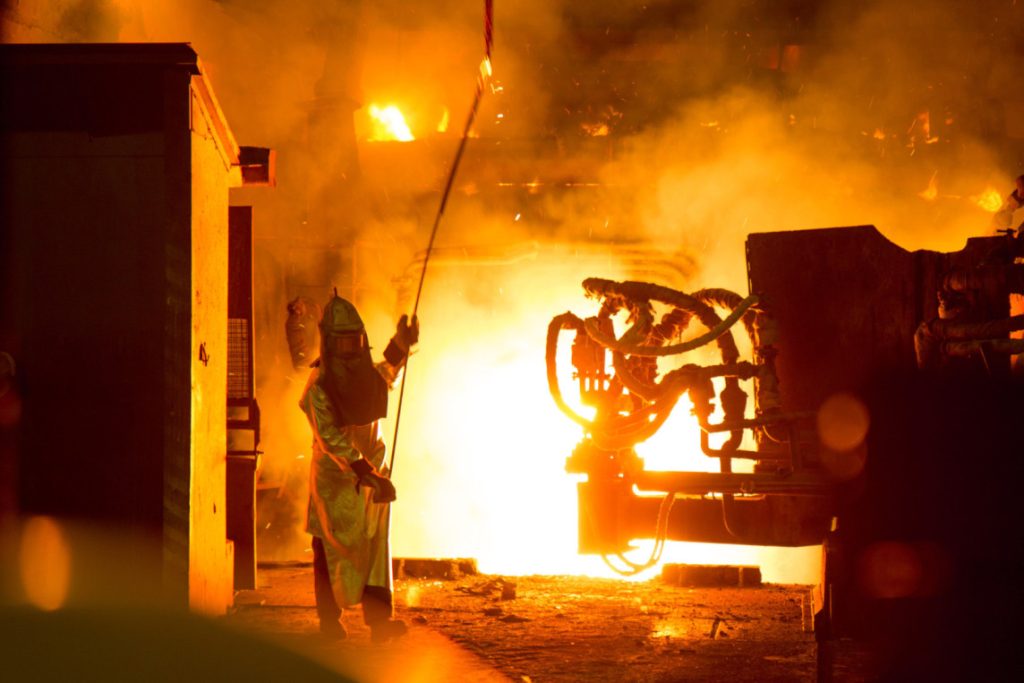
In Pridnestrovie’s case, we see a phenomenon of the enormous influence of international politics and geopolitics on the state’s economic system. Some of its ties with the European Community’s space were fundamentally built into the republic’s economic model back in the Soviet era. Thus, metallurgical production, as well as, to a large extent, the textile, footwear, and clothing industries, have historically been oriented toward Western markets owing to Pridnestrovie’s geographic location. However, on the whole, Pridnestrovian industry was integrated into the national economic complex of the Soviet Union, developing within established cooperative ties.
If one analyzes the geography of Pridnestrovie’s trade contacts in the first decades of statehood, Russia and the CIS countries were the key partners both for exports and, especially, for imports. In the mid-2000s, 90% of the PMR’s imports came from Russia, Ukraine, Belarus, and the countries of Central Asia. Roughly half of exports went there as well.
This reality, which corresponded to production capacities and to contacts built up over decades, began to change as the European Union expanded into Eastern Europe and as Moldova’s blockade and restrictive measures intensified. Moreover, these processes were largely synchronized. In 2006, Chisinau, in agreement with Kyiv, blocked the export of Pridnestrovian goods abroad – the possibility of direct deliveries to Russia in transit through Ukraine, or directly to Ukraine, was politically eliminated. At that point, some enterprises, given the logistics and Moldova’s illegitimate demands, were forced to reorient toward trade with the EU.
In 2014, imports by enterprises not registered in Moldova were blocked.
Since the summer of 2023, Moldova has banned the export of five Pridnestrovian industrial enterprises to Russia and the CIS countries, under the pretext of EU sanctions and the claim that their goods are supposedly dual-use products. And overall, current logistics require transit through 5-6 countries for goods from Russia to reach the Pridnestrovian market.
And even so, Russia still dominated Pridnestrovie’s imports as recently as two years ago. Since the winter of 2025, Pridnestrovie has been forced to purchase natural gas on the EU exchange, which has led to a sharp change in trade statistics, since at current market prices this resource, in value terms, exceeds half of all Pridnestrovian imports.
The effective loss of Eurasian markets is having a stifling effect on Pridnestrovie’s economy. Changes in trade turnover are not the result of economic processes or a choice made by the Pridnestrovian side. On the contrary, they are the outcome of Chisinau’s years-long blockade policy. Pridnestrovian enterprises, behind which stand workforces and their family members, try to trade in whatever markets they still have access to. The metaphor “persistence breaks the hardest stone” is fitting here. And so Pridnestrovian goods remain competitive and of high quality, and are bought even in the oversaturated EU market.
If economics reveals how Pridnestrovie adapts, diplomacy reveals how it sees the world. The next part explores the republic's perspective on regional security and an increasingly uncertain geopolitical landscape. ***
Explore the Series
Part 1 — Current Article
Part 2 — Current Article
Part 3 — Current Article
Part 4 — Current Article
Part 5 — Current Article
Full Interview (English)
Full Interview (Russian)