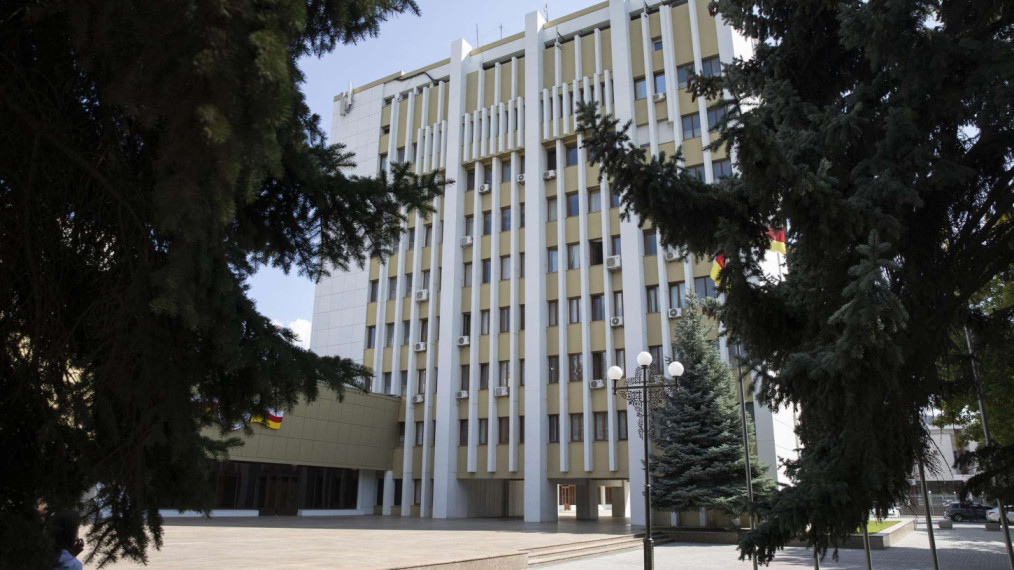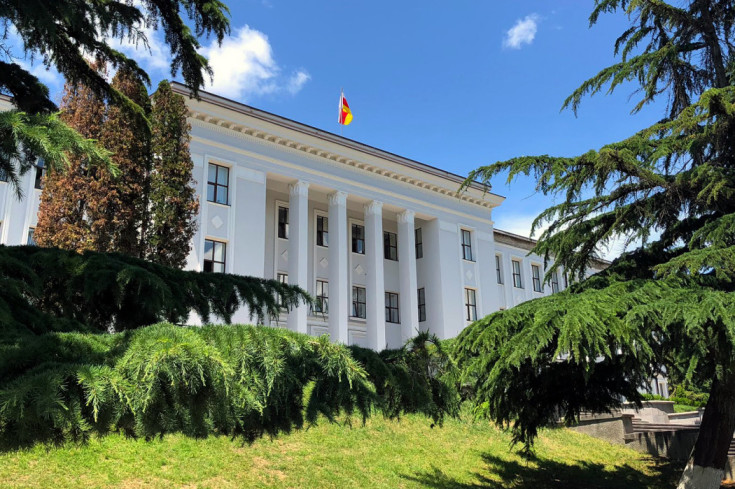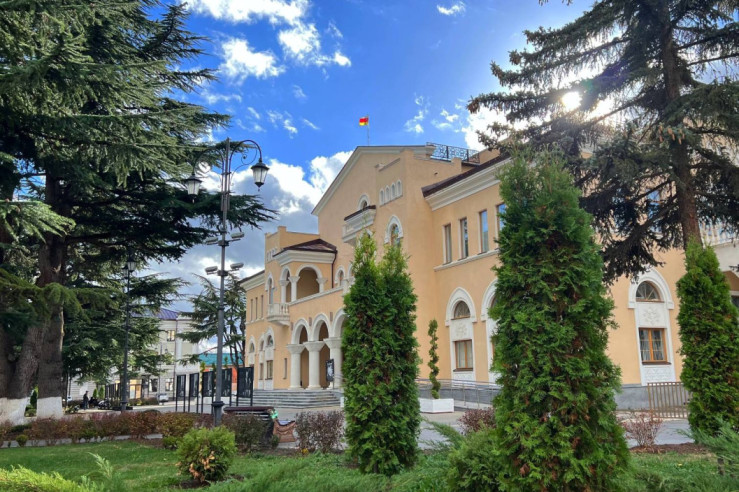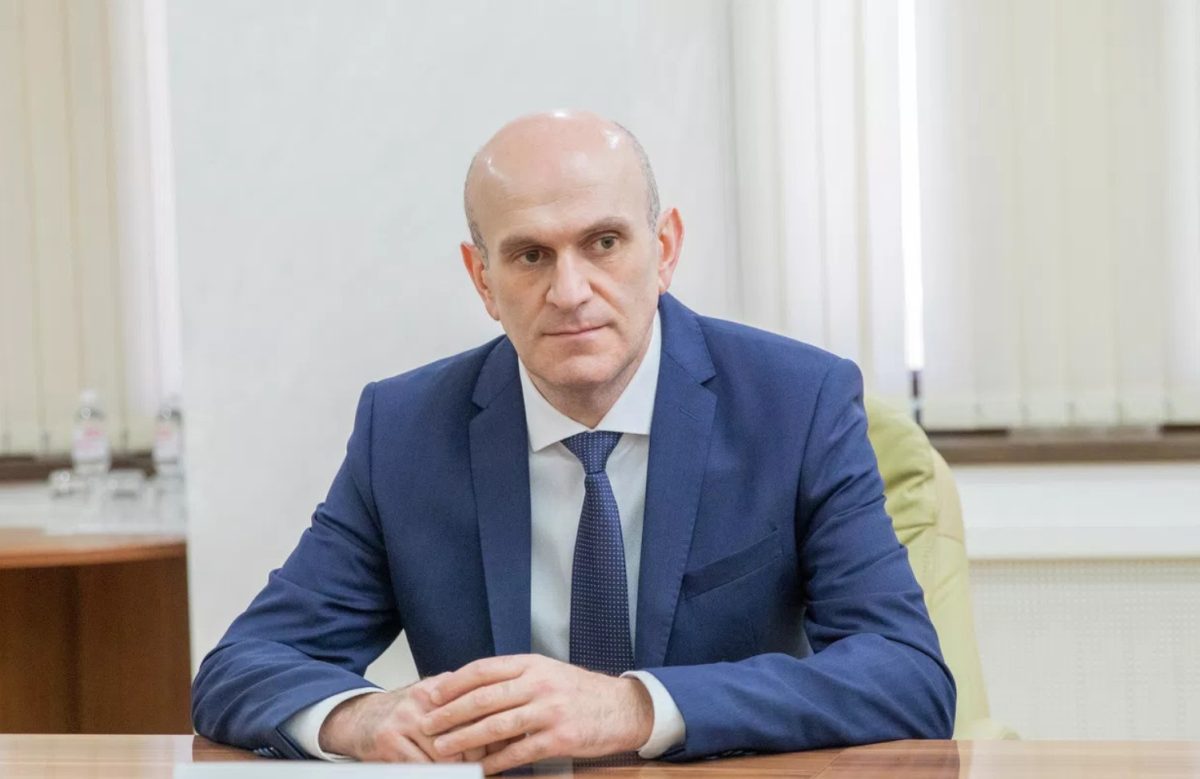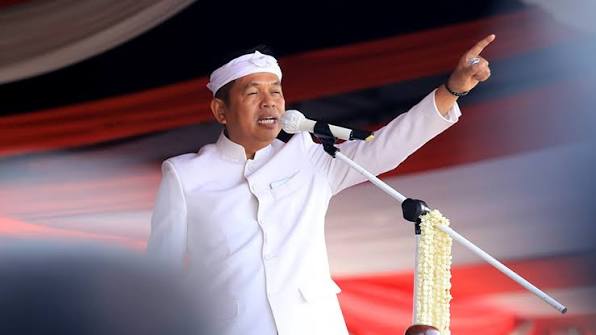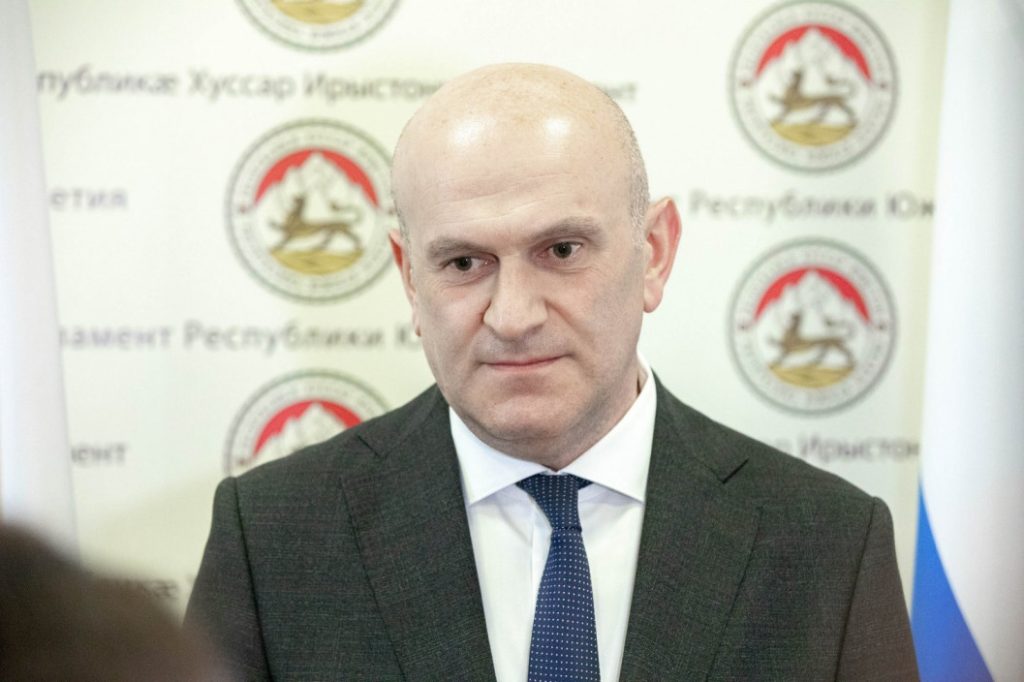
The complete and unabridged interview with South Ossetian Foreign Minister Akhsar Dzhioev.
LENTERAMERAH — Geopolitics often reduces nations to maps, alliances, and conflicts. In doing so, it can obscure the voices of the people who live behind those frontiers. For countries whose international status remains contested, that gap between perception and reality is often even greater.
Throughout this exclusive interview series, Lentera Merah has sought to present South Ossetia beyond the geopolitical narratives that usually dominate international attention. Having examined the country’s identity, culture, diplomacy, and development, we now present the conversation in its entirety.
What follows is the complete, unabridged interview with the Minister of Foreign Affairs of the Republic of South Ossetia, Akhsar Dzhioev, published in its original form.
Over the past several years, have South Ossetia’s foreign policy priorities evolved? What factors have been the main drivers of these changes?
In 2026, South Ossetia will celebrate the 36th anniversary of the proclamation of the Republic, and the Ministry of Foreign Affairs of the Republic of South Ossetia celebrated its 34th anniversary in May. The history of South Ossetia’s foreign policy agency is, in essence, the history of our republic’s formation. Therefore, let me begin with a brief excursus into the past to recall the origins of our statehood.
The independence of South Ossetia was proclaimed in the early 1990s as a means of preserving the people of South Ossetia from destruction by Georgia, or more precisely the Georgian Soviet Socialist Republic, led at that time by the famous nationalist Zviad Gamsakhurdia, whose policy was based on the slogan “Georgia – for Georgians.”
South Ossetia went through a difficult and thorny path of development: aggression, ethnic cleansing, genocide, and the economic blockade carried out by Georgia against South Ossetia from 1989 to 2008 resulted in the death and suffering of thousands of people. It can be said that the history of modern South Ossetia is a chronicle of the people’s struggle for the right to self-determination and the preservation of their identity.
It should be noted that the process of South Ossetia’s sovereignization was carried out exclusively through democratic means, in full compliance with the spirit and letter of the USSR legislation in force at the time, and was based on the inalienable right of peoples to self-determination. The proclamation of South Ossetian statehood was dictated by the de facto collapse of the USSR, the illegal abolition of South Ossetia’s autonomous status by the Georgian authorities, the onset of armed aggression and attempts to seize territory of South Ossetia, and the systematic extermination of Ossetians defending their right to freedom, human dignity, and, ultimately, the right to life that was orchestrated in Georgia.
Under these extremely difficult conditions, responsible and timely political decisions were made, ultimately leading to the legal formation of the new state. These included the adoption of the Declaration of Independence of the Republic of South Ossetia on December 21, 1991, the independence referendum on January 19, 1992, the adoption of the Act of Declaration of Independence of the Republic of South Ossetia on May 29, 1992, and the adoption of the first Constitution on November 2, 1993.
On May 28, 1992, the Ministry of Foreign Affairs of South Ossetia was established. The creation of its own diplomatic service – an essential attribute of the independent South Ossetian state -played a significant role in the development of the country and made a significant contribution to the construction of the young nation.
No doubt, the period before the recognition of South Ossetia’s independence was both the most difficult and the most fateful. It was a time of constant struggle for survival, for the right to self-determination. The Ministry of Foreign Affairs, still in its infancy, faced enormous challenges. The republic was completely blockaded, its voice unheard on the international stage. Our task was to break through this wall and convey to the international community the truth about what was happening, despite powerful opposition. An active information campaign was waged against South Ossetia, distorting reality and demonizing the people. We had to fight a flood of lies, defending historical justice and the right to exist in the face of constant threat from Georgia. Lacking experience and resources, the Ministry had to build relationships with potential partners, seek allies, and establish contacts in a climate of extreme uncertainty.
The fateful nature of this period lies in the fact that it was during these years, despite all the difficulties, that the foundations of future statehood were laid. Successful resistance to aggression, consolidation of society and, ultimately, the recognition of independence were the result of titanic efforts.
Another equally important and complex milestone can be identified as the period following the recognition of independence and the establishment of diplomatic relations with the Russian Federation and other states. The events of 2008 can be considered a turning point in the modern history of the South Ossetian people, dividing the country’s life into “before” and “after.” This historic decision opened new horizons for the country’s development and its foreign policy. Following recognition, the need arose to build full-fledged diplomatic relations, conclude international treaties, and interact on international platforms. This required new competencies, development of professional personnel, and adaptation to international norms.
Recognition opened the door to cooperation, but its development required active work. Despite recognition, Georgia and its allies continued – and still continue – their attempts to isolate South Ossetia and undermine its sovereignty. Constant efforts were required to strengthen the republic’s position on the international stage, explaining its right to independent development.
The South Ossetian Ministry of Foreign Affairs has always prioritized the protection of the country’s national interests and sovereignty. This principle remains unchanged today, defining the main areas of the Ministry’s activities.
Today, the South Ossetian Ministry of Foreign Affairs continues its work facing new challenges and discovering new prospects. Work is underway to further strengthen South Ossetia’s position, expand its circle of friendly countries, develop mutually beneficial relations, and ensure the rights and interests of our citizens living outside the Republic.
The past years have demonstrated the need and mutual interest of the Republic of South Ossetia and the Russian Federation in a friendly alliance and cooperation in a challenging international environment, opening the way for South Ossetia to develop and for Russia to strengthen its position in the south.
Looking back, it’s clear that, despite changing geopolitical realities, our foreign policy priorities remain unshakable. All these years, we have consistently adhered to our chosen course, relying on the principles established during the early days of our foreign policy agency.
The question of our foreign policy priorities is, at its core, a question of how we adapt to a rapidly changing world while remaining true to our fundamental principles.
If we talk about the dynamics of recent years, I wouldn’t call it a change in course. Rather, it’s a process of qualitative deepening and broadening of our horizons. Our main strategic vector remains unchanged: allied, integrated, and fraternal relations with the Russian Federation. This is the foundation of our security and statehood, and it is not subject to revision.
The world is no longer unipolar, and we are witnessing the emergence of new centers of power. South Ossetia is forced to develop while at the epicenter of complex regional processes amid increasing geopolitical turbulence.
Ensuring national security is of paramount importance to us. With the West attempting to destabilize the Caucasus, our foreign policy has become more focused on preventive diplomacy. We clearly define our red lines and work to strengthen South Ossetia’s voice in all international forums where there is willingness to hear the truth about our path.
We understand that foreign policy is not just about diplomatic protocols but also about delivering concrete results for our citizens: from simplifying border crossing procedures to attracting investment and humanitarian projects. We continue to build a modern state that is open to friends and reliable for allies.
Beyond traditional state-to-state diplomacy, how does South Ossetia seek to expand its international engagement through culture, education, academia and public diplomacy?
For South Ossetia, “soft power” is a way to be heard and understood in the world despite all political barriers. To be known, we need to not just announce ourselves from the stands, but to show who we really are. And here our culture is the main ambassador. When our dance companies perform on international stages and artists exhibit their works, it sparks genuine interest. It’s a living dialogue that breaks through any information blockade. People see our traditions, our character, our history, and this changes their perceptions better than any press release could.
In terms of education and science, we prioritize youth and academic connections. We actively work to integrate our students and scholars into the shared educational environment. Sharing experiences, participating in international conferences, and conducting joint research are bridges that cannot be broken. When a young scientist from Tskhinval discusses a scientific problem with a colleague from another country, politics fades into the background. What remains are professionalism and human interaction.
We strive to be open. We want people to come here, to see our republic with their own eyes, and to interact with our people. Ultimately, our goal is to show that South Ossetia is not just a dot on the map but a distinctive culture open to dialogue. We don’t isolate ourselves but rather build connections where possible, and we believe that sincerity and cultural exchange are the most reliable foundation for long-term recognition and friendship between peoples.
The 2026–2030 Socio-Economic Development Program marks an important stage in South Ossetia’s development. In your view, what tangible improvements do you hope ordinary citizens will experience over the next five years?
The State Program for Socioeconomic Development for 2026–2030 is a strategic plan for improving the quality of life for every resident of the republic. We understand that people are not looking for abstract indicators, but for real changes that can be felt on the ground.
First and foremost, this involves modernizing social infrastructure, which requires a steady transition to systemic renewal. In the coming years, the focus will be on educational and medical institutions. Citizens should receive high-quality medical care and education in modern, comfortable conditions without having to leave the republic.
The development of the real economy and creation of jobs are also key. We understand that social benefits are important, but family stability depends on decent work. The program provides support for the agro-industrial complex and small businesses. It’s essential to create conditions for local producers to thrive and for young people to see opportunities for self-realization here at home, in South Ossetia.
Of course, implementing such a large-scale program requires time and coordinated work across all agencies. But I want to emphasize that our primary measure of success is not official reports, but the impact on the lives of ordinary people. We are working to ensure that within five years, every resident of the republic feels that South Ossetia has become a more comfortable, safe, and promising place to live and raise children.
South Ossetia has a long and distinctive historical and cultural heritage. Which values or characteristics of the Ossetian people do you believe continue to serve as the foundation of society today?
You know, when I’m asked what exactly unites our people, I always return to our roots. Ossetia, and South Ossetia in particular, is not just a territory; it is, first and foremost, a people whose identity has been forged over centuries of hardship. And if we talk about what forms the foundation of our society today, I would highlight several key points.
First and foremost, it’s Ӕgdau – our code of honor and conduct. It’s not just a set of rules; it’s an internal compass passed down from father to son. Respect for elders, responsibility for one’s family, and dignity in one’s actions – these are what prevents us from becoming absorbed in the global world while preserving our unique identity. For us, human honor has always been more important than material wealth.
Secondly, it’s family. In Ossetia, the concept of family extends far beyond parents and children. It’s a vast support network where everyone feels responsible for their family. During difficult times this unity became our greatest shield. Today, this manifests itself in the fact that we are never left alone in times of adversity, as we always have the support of our near and distant relatives and neighbors. It’s a sense of community that cannot be bought or imitated. In the most difficult times, when South Ossetia was going through the hardest trials, it was this sense of community, this willingness to come to the aid of our neighbors without further ado that saved us. We know how to stand together when needed.
Thirdly, Ossetian hospitality. This isn’t just a ritual with three pies on the table. It’s a profound philosophy of accepting others. This reflects the wisdom of a people who, despite their closed borders, are always open to friendship and sincere communication. This ability to see a guest as a messenger of destiny to whom one must give one’s best is a trait that makes society humane and warm, even in the harshest times.
And finally, the love for our native land. These are not just pompous words. For us, the mountains, our gorges, our shrines are more than just landscapes. They are a living connection with our ancestors. We feel part of something much greater than just a modern state. We are the guardians of an ancient culture, and this awareness gives us the strength to look to the future with optimism.
Today, despite all the challenges of the times, these values remain unshakable. We are changing, we are developing, we are open to the world, but at the core of our society are still the same principles as hundreds of years ago: honesty, courage, and a deep respect for our roots. This is what makes us Ossetians and allows us to move forward with confidence.
To sum it up in a single sentence, the foundation of Ossetian society today is a combination of proud dignity and profound humanity. These are the people who can be as strong as the rocks of the Caucasus when it comes to defending their values and incredibly warm-hearted when it comes to friendship, family, and hospitality. It is this balance that allows South Ossetia, and the Ossetian people as a whole, to maintain their uniqueness in a rapidly changing world.
If someone were to spend a day with an ordinary family in South Ossetia, what aspects of daily life would they experience? Which social values best reflect contemporary Ossetian society?
Spend a day with an ordinary Ossetian family and you’ll quickly realize that time flows differently here. It’s not about a slow pace, but about priorities: people come before work, and traditions aren’t museum exhibits but the living framework that holds everyday life together.
The first thing you’ll notice is the cult of the guest. In an Ossetian family, a guest isn’t just someone who drops by for a cup of tea. They’re practically a sacred figure. If you enter the house, you won’t be allowed to leave until you’ve sampled everything on the table.
An Ossetian feast isn’t about food, but rather a ritual with strict adherence to seniority and centuries-old rules. For us, every toast is a prayer. This may seem difficult, but it instills discipline and teaches respect for elders.
You’ll likely witness pie-making. It’s more than just baking; it’s a skill passed down from mother to daughter. In a typical family, pies are a sign: if they’re on the table, it means there’s a holiday or an important event in the house.
You’ll see a modern guy in designer sneakers scrolling through social media and then standing up when an older person enters the room. This is not a gesture for show – it’s our culture and traditions, ingrained in our subconscious at a genetic level.
If we try to identify the main “pillars” of modern Ossetian society, it will be a triad: Respect, Kinship and Honor.
The opinion of the elder in the family is decisive. Even if the younger generation disagrees, they will show respect in a formal manner. This creates a surprising effect: there are almost no lonely elderly people in society. They are always at the center of family life, surrounded by attention.
In Ossetia, you will always be “someone’s,” meaning a representative of a specific family group from a specific area. A family name isn’t just an entry in a passport; it’s a reputation. A person is responsible not only for themselves but also for the honor of their family. It’s a powerful social regulator; you won’t do something mean, because it will cast a shadow on all your relatives.
Ossetian society is very close-knit. If a family member experiences a tragedy or a joyful event, the entire neighborhood hears about it. Helping neighbors, attending funerals and weddings is an essential part of life. You can’t be alone; you’re always part of a larger organism.
In Ossetian culture, displaying emotions is not customary. A man should be reserved, and a woman wise and modest. This isn’t about suppressing one’s personality, but about maintaining composure in any situation.
By the end of the day you’ll likely feel slightly tired from the abundance of food and conversation, but at the same time you’ll feel a strange sense of security. In today’s world, where everyone is out for themselves, an Ossetian family provides a sense of support.
You’ll understand that modern Ossetian society is a remarkable blend. We use the latest iPhones , drive nice cars and so on, yet we still sit down at the table to pray for our ancestors, for peace in the home, and for the health of our elders. And there’s no contradiction in this. For us, this is what a normal, fulfilling life is.
What hopes and aspirations do young people in South Ossetia have today? Do you find that most young people wish to build their future at home or do they increasingly look for opportunities abroad?
The future of youth in South Ossetia is always a conversation at the intersection of a deep attachment to their native land and a pragmatic search for opportunity. Describing the mood of young people today reveals a picture full of contradictions.
The aspirations of young people in South Ossetia differ little from those of their peers in other parts of the world. They want a quality education, an access to modern technology, professional opportunities and, of course, stability.
Many young people today are very ambitious. They follow global trends, master digital professions, and are interested in entrepreneurship. There is a demand for a vibrant environment, so that the republic has more spaces for creativity, sports, and intellectual leisure. Young people want to feel that their voices are heard and that their ideas can be transformed into real projects rather than remain on paper.
Stay or leave? This is the most pressing question. There’s no clear answer: “everyone leaves” or “everyone stays.” The situation seems more like a pendulum.
Most young people seek higher education outside the republic, most often at Russian universities. This is a natural process. The scope of educational programs in large cities is objectively broader. The question is whether they return.
Many leave in search of a higher standard of living and career prospects. In a small republic, the labor market is limited, and young professionals often struggle to find work that matches their ambitions and income level. This is the main reason for the outflow.
At the same time, family and clan ties are very strong in South Ossetia. Many of those who leave do so with the idea of “earning money and returning” or “gaining experience and applying it back home.” There are many young people who consciously choose to stay because they see potential in the republic’s development, want to be closer to their roots and build a future here, in their home.
It’s fair to say that today’s youth in South Ossetia are searching for balance. Those who leave do so not out of a lack of love for their homeland, but out of a desire to expand their horizons. Those who stay often become drivers of change, trying to introduce new approaches to culture, business, or public life.
The main challenge facing the republic today is to create conditions that make returning home not just a nice gesture but a logical and attractive choice for young professionals. If young people feel they can fulfill their potential just as effectively at home as in the big city, then the desire to build a future in South Ossetia will become dominant. For now, however, this is a choice each person makes for themselves, weighing their personal ambitions and their love for their native land.
Which traditions or elements of cultural heritage best represent the identity of South Ossetia? How are these traditions being preserved and passed on to younger generations?
Traditions are strong in South Ossetia. They are the living fabric of everyday life, defining the rhythm of life, the manner of communication, and the self-awareness of the people. If we try to identify what best reflects our identity, then, as I have already noted, the Ægdau (Code of Honor), the philosophy of the table (Iron fyng) and the cult of elders come to the fore.
The concept of Ægdau defies easy translation. It’s an unwritten code of conduct that governs everything from how to enter a house to how to behave in a conflict. It’s the core of Ossetian identity, teaching restraint, modesty, and responsibility for one’s words and actions.
An Ossetian feast is a complex ritual, where every action has meaning. Three pies on the table symbolize the unity of God, the Sun, and the Earth. The order of toasts is strictly regulated. First, a prayer is offered to the Almighty, then for the well-being of the people and peace in the home. It is a school of oratory, diplomacy, and respect, where each participant learns to listen and speak with dignity.
In South Ossetia, respect for elders is far from a formality. Their opinions, life experience and wisdom remain an unquestioned authority. This creates a powerful bond between generations. From childhood, young people are taught that their main support is their family and their clan, and their primary duty is to honor their ancestors.
Preserving culture in South Ossetia occurs not through textbooks but through practice. The primary institution for transmitting traditions is the family. From an early age, children attend family celebrations, observing how their elders conduct conversations and how roles are assigned at the table. They absorb these rules through the air, simply by imitating adults.
Trips to sacred sites and ancestral shrines (dzuars) are an important part of our lives. Families gather to perform rituals, make sacrifices, and pray. It unites people, reminding them of their roots and of belonging to a particular clan.
Despite globalization, the Ossetian language remains a vital tool for preserving identity. Schools and families place great emphasis on this, as the native language encodes concepts that cannot be fully conveyed in another language.
Celebration of national and religious holidays such as Uastyrdzhiyy Bontæ (Days of Uastyrdzhy, dedicated to the most revered saint in the Ossetian tradition, Uastyrdzhy – the patron of men, mentor of youth, and defender of the disadvantaged) – becomes a time when all Ossetians unite. During these days, traditions extend beyond private homes, becoming a national cultural manifesto.
Of course, the modern world dictates its own rules. Young people spend more time online, lifestyles change, and some complex rituals are simplified. However, Ossetia possesses a remarkable ability to adapt without losing its essence. During the trials that the republic has repeatedly faced it was precisely the unity dictated by the Ægdau that helped people persevere.
It’s important to understand that passing on these values today isn’t coercion, but a conscious choice. The younger generation, seeing traditions not as shackles but as support, is eager to learn them. The Ossetian language is heard in modern songs, national motifs are integrated into design and art, and social media is becoming a platform for discussing the finer points of etiquette. This proves that culture is alive as long as it can speak the language of its time without losing the depth of its roots.
Music often provides one of the deepest insights into a nation’s identity. Which traditional songs, musical traditions, or artists do you believe best reflect the spirit of the Ossetian people? Are there any cultural festivals or artistic events that hold particular significance for South Ossetian society?
For Ossetians, music is also a kind of genetic code that encrypts the history, ethics, and character of the people. In Ossetian culture, music has always been inextricably linked with mountains, feasting, heroic epics, and deep respect for elders.
The heart of Ossetian identity is the Nart epic. Musical tales of Nart heroes form the foundation upon which Ossetian self-awareness is built. When listening to ancient heroic songs performed, for example, by male choirs, one feels power, severity, and dignity. This is music that teaches courage and loyalty to tradition.
Ossetian music is unthinkable without the khisynfandyr (an ancient bowed instrument). It has a lingering sound, slightly melancholy but incredibly deep, capturing the very atmosphere of the Ossetian mountains. It’s also impossible to imagine the Ossetian spirit without the rhythm of the doul (drum). The rhythm of the doul is the pulse of the Ossetian dance Simd, which demands from the dancer not only grace but also iron discipline. This aptly reflects the Ossetian mentality: outward restraint with an inner fire.
When discussing those who best captured this spirit, one cannot help but mention Kim Suanov, Bulat Gazdanov, Boris Galaev, and Felix Alborov, who wrote the South Ossetian anthem. They made traditional music accessible and relatable to every Ossetian while preserving its pristine purity. Ilya Gabaraev and Dudar Khakhanov are composers who wove Ossetian melodies into classical symphonic form. Also worth noting are contemporary ensembles that work with folklore, carefully preserving polyphonic forms.
We gave the world Valery Gergiev, the man who controls musical processes across the planet. He is our pride, and his magnitude as a personality is difficult to overstate. And if you want to feel the pulse of modernity you should listen to Veronika Dzhioeva. With her cosmic voice she has conquered the world’s finest opera stages while remaining utterly Ossetian in spirit.
For South Ossetia, cultural events have a special, almost sacred significance. They are a way to maintain a connection to roots amidst a complex geopolitical reality. National and religious holidays are accompanied by a vast array of musical traditions. Music becomes a way to unite family and the nation.
South Ossetia regularly hosts events featuring performances by state ensembles (for example, “Simd”). When Ossetian music plays on stage the audience is filled with a sense of pride that is difficult to describe. Ossetian music serves as a kind of dialogue with our ancestors. It teaches us that even in the most difficult times, we must maintain dignity, keep our backs straight, as in a dance, and remember who we are.
As for the literature, Kosta Khetagurov is, of course, the number one. He’s called the Ossetian Pushkin, and that’s no exaggeration. His collection “Ossetian Lyre” can be found in every house. He was more than just a poet, but rather the voice of the people, a man of incredible destiny and talent. If you want to understand the soul of an Ossetian, you should read Kosta.
In painting, Makharbek Tuganov is an absolute master for us. He was not just an artist, but a true ethnographer with a brush in hand. He so deeply understood our epic Nart Tales, that his illustrations have become iconic. Looking at his works you literally see the history of our ancestors.
The most interesting thing is that all these people, despite the differences in eras and genres, are united by an incredible devotion to their roots. In Ossetia, creativity is always a dialogue with the mountains, with history, and with that very Alan character that refuses to do anything halfheartedly. Therefore, when we speak of these names, we are talking not simply about art, but about what makes us Ossetians.
Ossetia also has a huge athletic heart. The Ossetian wrestling school is considered one of the strongest in the world. The names of Soslan Andiev, Dzambolat Tedeev, Arsen Fadzaev, Makharbek Khadartsev, Artur Taymazov, Khadzhimurat Gatsalov are legends that have raised generations. Today, when we see an Ossetian athlete on the podium we see more than just the result of training. We see the fruit of years of work by an entire school, where sport is not about money or fame, but first and foremost about honor, dignity, and the ability to be the first while remaining human.
South Ossetia and the International Order
Some analysts argue that the proposed Eurasian Charter of Diversity and Multipolarity represents a normative response to the fragmentation of today’s international order by emphasizing principles such as sovereignty, non-interference, equality among states and civilizational diversity. From South Ossetia’s perspective, do these principles resonate with the spirit of the 1955 Bandung Conference and the Non-Aligned Movement, despite today’s very different geopolitical context?
The question of the continuity of the ideas of the Eurasian Charter of Diversity and Multipolarity with the legacy of Bandung in 1955 is not just an academic debate, but an attempt to find historical support for contemporary foreign policy. For South Ossetia, whose statehood is inextricably linked to the struggle for the right to self-determination and recognition, this parallel is profound and meaningful.
The Bandung Conference became a manifesto of the “global South” against the dictates of colonial powers. Its central message was the right of peoples to independently choose their own destiny, political system, and cultural way of life. For South Ossetia, which for decades defended its right to exist despite external pressure and attempts to impose alien standards, the principle of “civilizational diversity” enshrined in the Eurasian Charter sounds like a modern interpretation of the Bandung principles. It represents a rejection of the idea of a universal development model, which is often used as a tool for geopolitical domination.
The principles of non-interference in internal affairs and respect for territorial integrity (subject to the right to self-determination) were the cornerstones of the Non-Aligned Movement. In today’s world, where the sovereignty of small states is often eroded under the pretext of humanitarian interventions or democratization, the Eurasian Charter proposes a return to a classical understanding of international law. For South Ossetia, whose security directly depends on strict adherence to the principle of sovereign equality, such regulatory framework is a natural defense mechanism.
The Bandung Conference arose as an attempt by Asian and African countries to avoid becoming bargaining chips in the confrontation between two superpowers. Today’s fragmented world once again forces small states to face a stark choice: “Who do you stand with?” The Eurasian Charter, which proclaims multipolarity, essentially offers an alternative to that choice: the opportunity to be a part of the international community without sacrificing one’s identity or becoming a junior partner in a rigid hierarchical system. This resonates with the spirit of the Non-Aligned Movement, which sought to create a space where the voice of a small state is heard as clearly as that of a great power.
Of course, the context of 1955 and today is different. Back then, the world was struggling against colonialism; today, it’s struggling against attempts to establish a “rules-based order” that replaces international law. However, the essence remains the same: it is a struggle for subjectivity.
The Eurasian Charter is an attempt to legitimize a world in which small nations have the right to their own history, their own values, and their own security. In this sense, despite the decades separating Bandung and modern times, the spirit of the struggle for justice and equality remains unchanged. South Ossetia, like no other, understands that multipolarity is the only guarantee that the right to life and development will not be entirely dependent on the will of the “powers that be.”
Belarus has adopted an official roadmap for the Eurasian Charter ahead of discussions at the United Nations in September 2026. In your view, what characteristics should a truly effective and inclusive Eurasian Consultative Mechanism possess? What would be necessary for such an initiative to gain broader international legitimacy?
The creation of a Eurasian Consultative Mechanism in the context of the implementation of the Eurasian Charter is an attempt to find a balance between regional specifics and global rules of the game. For such a mechanism to become an authoritative platform it must move from a declaration to actual functionality.
The main problem with many regional initiatives is their excessive politicization. An effective mechanism should focus on logistics, energy security, digital standards, and simplification of cross-border procedures. When countries see concrete economic benefits, trust naturally grows.
Inclusiveness shouldn’t mean mandatory unanimity on all issues, which often paralyzes work. What’s needed is a multi-tiered structure, a baseline for all participants, and “coalitions of the willing” for the implementation of specific projects, such as the construction of transport corridors. This will prevent initiatives from being blocked by individual players.
The mechanism must be supported by a permanent secretariat, comprised not only of officials but also of independent experts, academics, and business representatives. Decisions must be based on data, not just political expediency.
For the initiative to be recognized at the UN level and beyond Eurasia, it must overcome the perception of it as a “closed club.” Any regional charter must be “translated” into the language of the global agenda. Legitimacy comes when the rules of the game are clear and predictable for external players.
For the initiative of Belarus and its Eurasian Charter partners to be heard at the UN, it must be presented as Eurasia’s contribution to addressing global challenges. If the mechanism proves that it makes the region more stable, predictable, and open to trade, international legitimacy will follow naturally through recognition of its practical benefits.
If you were asked to introduce South Ossetia to an international audience unfamiliar with the country, what aspects of its history, culture, society or natural heritage would you most like people to discover?
If I had to introduce South Ossetia to someone who’d never heard of it, I wouldn’t start with politics or dry geographical information. I’d begin with the feeling you get when you first find yourself among these mountains.
The first thing that strikes you about South Ossetia is, of course, the scale and its pristine nature. These aren’t polished tourist resorts but the rugged, majestic Caucasus Mountains, where time seems to slow down. I’d tell you about the high-altitude villages where people live in harmony with the rhythm of nature, about the pristine glaciers and gorges that remember the footsteps of ancient travelers. This is a place where you feel small, yet at the same time part of something eternal.
I would definitely mention that the Ossetians are descendants of the Alans, an ancient people whose history stretches back to ancient times. This isn’t just a textbook phrase; it’s a living tradition. I would introduce people to the Ossetian feast. The ritual with three pies, each with its own sacred meaning, and the toasts that become lessons in wisdom, honor, and respect for elders. It’s a culture where the word “guest” is sacred, and human dignity is valued above any material possessions.
It’s impossible to talk about this country without considering its history. South Ossetia is a place where people have learned to maintain their identity despite any circumstances. I would speak of the incredible resilience of our people. This is not a story of sacrifice, but a story of love for life. Despite all the hardships, people here know how to laugh, sing songs, and make plans for the future. This is a society where everyone knows the value of peace and truly appreciates every peaceful day.
I’d like for people to learn about how the archaic and the modern are intertwined in South Ossetia. Here you can meet someone who knows the Nart epic by heart, yet at the same time is a modern professional, open to the world. This is a country with a very strong inner core, which doesn’t try to imitate others, but carefully preserves its own unique identity.
Many countries are remembered not only for their politics but also for the stories their people tell about home. Is there a place, tradition or personal memory that, in your view, best captures what it means to be Ossetian?
You know, when people ask me what it means to be Ossetian, I don’t think of history textbooks or loud political slogans. For me, this feeling is always tangible. It smells of campfire smoke, fresh mountain air, and, of course, warm dough. It’s a state of mind that’s ingrained in the cultural code, even if you live thousands of kilometers from Ossetia.
Being an Ossetian means understanding that your actions are the face of your family and your clan. You can’t afford to be “no good”, because generations of ancestors stand behind you, and you have no right to let them down. In Ossetian culture, respect for elders is the foundation of morality. Toasts at the Ossetian table are not just wishes; they are prayers and history lessons passed down orally. An Ossetian knows how to listen to elders offering a toast and understand that in that moment, a connection is made between times. Ossetian history is steeped in the struggle for survival in the harsh mountains. This explains our incredible resilience, our ability to never complain, and our ability to withstand hardship.
A true Ossetian knows how to combine pride and humility. It’s when you can be as tough as a rock when it comes to defending your home, yet remain endlessly hospitable, giving your guest the best you have. And wherever you are, that invisible rhythm of the mountains always resounds in your heart, and you always remember that behind you stand those who came before you and those who will come after. It’s a sense of belonging to something greater than yourself. And that, perhaps, is the most precious thing we have.
Many Indonesians know South Ossetia only through reports on geopolitics. What message would you like to share with Indonesian readers so they can gain a broader understanding of South Ossetia, its people and its society?
It often happens that we learn about distant countries only from news headlines. For many in Indonesia, South Ossetia is likely a name that flashes across reports about big politics and conflicts. But behind these dry lines there is something much deeper, more vibrant, and more human.
Taking this opportunity to address Indonesian readers, I would like to invite them to forget about political maps and reports and look at us as people who, like you, love our land, value our culture, and dream of a peaceful future for our children.
South Ossetia is famous for its majestic Caucasus Mountains. The Ossetian people have an ancient history, rooted in ancient times. Our culture is not only a history of struggle, but also a history of hospitality. We have an old saying: “A guest is a gift from God”. If you ever find yourself in Ossetia, you will see that we welcome people with an open heart, a set table, and a sincere desire to share what we have.
As in Indonesia, where family ties and respect for elders are paramount, in South Ossetia, family is the foundation of everything. We carefully preserve our traditions, our language, and our customs, passing them on from generation to generation. Our people have endured many trials, and it is precisely this that has taught us to appreciate simple joys: a peaceful sky, the laughter of children, and the opportunity to create on our own land.
We don’t want to be perceived solely through the prism of geopolitics. We want the world to know about our artists, our poets, our athletes, and our scientists. Our society strives for development and is open to dialogue and friendship.
Indonesia and South Ossetia are on opposite sides of the world, separated by thousands of kilometers, different climates and time zones. But human hearts speak the same language. We invite you to look beyond the news feeds. Ossetians are proud of their past but look to the future with hope.
If you ever want to get to know us better, know that in the heart of the Caucasus you have friends who will be happy to tell you their story – not the one written in political textbooks, but the one that lives in our homes and our souls. ***
Explore the Series (Part 1–4)
- Part 1 — Identity & Society
- Part 2 — Culture & Everyday Life
- Part 3 — Diplomacy & International Order
- Part 4 — Development & The Future
- Also available in Russian: Read the complete interview.