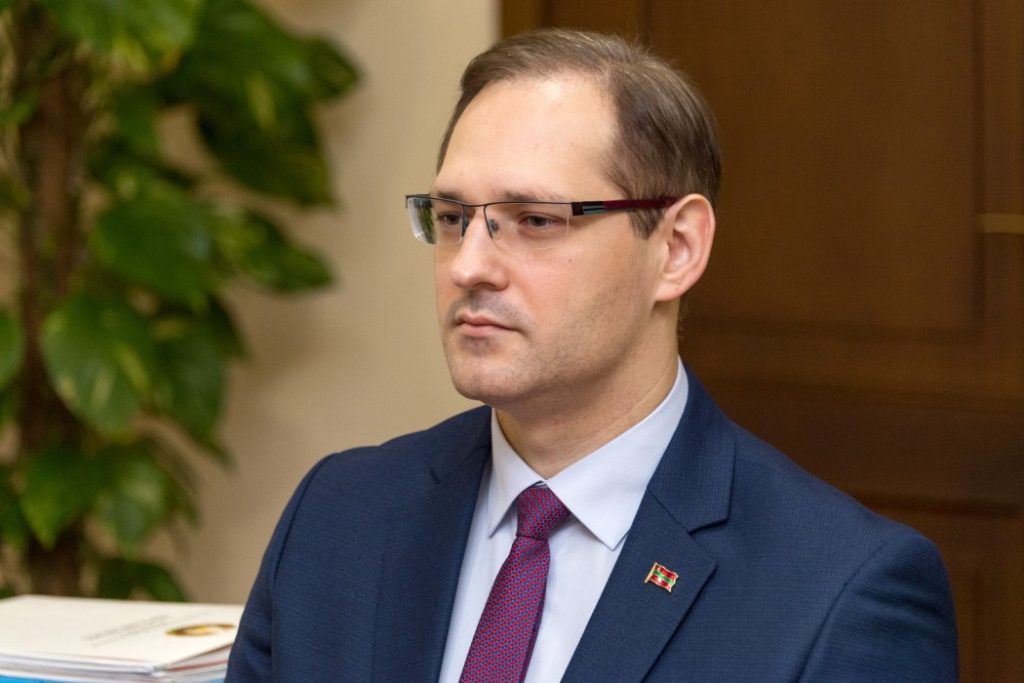
Lentera Merah opens this exclusive interview series with Vitaly Ignatiev, Minister of Foreign Affairs of the Pridnestrovian Moldavian Republic, by exploring a dimension of Life in Pridnestrovie that rarely receives international attention: its people, collective memory, and the younger generation shaping the country’s identity.
LENTERAMERAH – For more than three decades, Pridnestrovie has largely appeared in international discourse through the lens of geopolitics. Political status, protracted disputes, and regional security have become the dominant frameworks through which the territory along the Dniester River is understood.
Yet beyond those debates lies a society that continues to build its everyday life, preserve memories across generations, and shape a distinct identity amid a changing world. This human dimension remains one of the least explored aspects of Life in Pridnestrovie.
That perspective sets the stage for Lentera Merah’s exclusive interview with Vitaly Ignatiev, Minister of Foreign Affairs of the Pridnestrovian Moldavian Republic. Presented as a five-part series to give each theme the depth it deserves, the opening installment explores Life in Pridnestrovie through the experiences of its people, the collective memory that binds generations, and the aspirations of young Pridnestrovians who have grown up calling this land home.
Before turning to diplomacy, identity and the broader geopolitical questions surrounding Pridnestrovie, we begin somewhere more personal.
If I were to visit Pridnestrovie not as a journalist but as a friend seeking to understand the life of its people, what experiences would you recommend so that I could truly appreciate the spirit of Pridnestrovie?
You could start with simply walking around Pridnestrovian towns and villages. You would see how organically different architectural eras, languages, cultural traditions, and monuments from various historical periods coexist here. This is, among other things, a reflection of the very sound approaches that Pridnestrovie follows in studying its own history. That is why, unlike many other states, for us historical memory never becomes an object of dispute or disagreement, but on the contrary serves as a powerful unifying factor. But above all, it would be useful to talk with Pridnestrovians themselves.
Our people are open and hospitable. Representatives of different nationalities often gather at the same table, speak several languages, recall family stories, and maintain mutual respect even when they hold different views on particular events. This everyday culture of coexistence, perhaps better than any official concept, explains what the multinational Pridnestrovian people are and why they remain internally stable and cohesive despite all external trials and challenges.
Places alone rarely define a nation. Beyond its towns and landscapes, every society is shaped by the values, memories, and traditions passed from one generation to the next.
History lives not only in museums or textbooks but also in families and everyday life. In your view, which stories, values, or memories are most often passed down from generation to generation and continue to shape Pridnestrovie’s identity today?
A crucial element of collective memory remains the understanding that Pridnestrovie was never created as the territory of a single people or a single culture. Our land was historically shaped by the efforts of people of different nationalities, united by common constructive labor and a shared sense of responsibility for the place where they lived. Respect for linguistic, ethnic, religious, and cultural diversity is regarded here as a natural norm of public life, shaped over many generations.
Undoubtedly, a special place in the historical memory of Pridnestrovians is occupied by the Great Patriotic War. Nearly every family has ancestors who fought, were wounded, or died in battles to liberate their homeland and all of Europe from the fascist plague, or who forged victory on the home front, working in factories and plants. There is no major town in Pridnestrovie without a memorial to its fallen heroes. A living connection to the events of those years is maintained by the still-living veterans of war and labor, who are held in great esteem by society.
Victory Day is one of the main and most beloved holidays of the Pridnestrovian people. Suffice it to say that the central event of the May 9 celebrations is traditionally the march of the “Immortal Regiment”: in 2025 it brought together 85,000 people across the republic, including 35,000 participants in Tiraspol, and in 2026, already 105,000, of whom 42,000 marched in the capital’s column.
The memory of the tragic events of the early 1990s holds an especially profound place for Pridnestrovians. Memorial events dedicated to various episodes of the conflict are held annually in the republic – the attack on Dubossary, the Bendery tragedy, and the deployment of the peacekeeping contingent.
Respect for education, professionalism, and honest labor is passed down from generation to generation. Pridnestrovie has always been a land of engineers, teachers, doctors, military personnel, athletes, highly skilled workers, scientists, and farmers. In many families children continue their parents’ professional traditions, and a sense of personal responsibility for the results of one’s labor remains one of the most enduring social values in the Pridnestrovian Moldavian Republic.
While collective memory preserves the past, every nation ultimately entrusts its future to a new generation.
Every generation grows up in a different historical context. How do young people in the PMR see their country’s future today? Do they see it differently from the generation that lived through the events of the early 1990s?
As research shows, on fundamental questions about their country’s future, all Pridnestrovians hold similar views, albeit sometimes for somewhat different reasons.
Older people remember very well the historical context of the period when the Pridnestrovian Moldavian Republic was created by their initiative and will: the surge of nationalism in the right-bank part of the Moldavian SSR, attempts to impose an entirely alien identity, Chisinau’s unwillingness to take account of Pridnestrovians’ rights and interests, and, finally, the full-scale military aggression of Moldova’s mobilized army against Pridnestrovie, which claimed hundreds of lives.
Moreover, in the decades that followed, Moldova continued systematically to take measures stigmatizing and discriminating against the multinational Pridnestrovian people. That is why older generations have no doubt that having their own state is the only reliable guarantee of respect for their inalienable rights, freedoms, and interests, as well as for the preservation of their unique identity.
As for young people, they did not, of course, personally witness the tragic events of the period when the PMR was founded, but they know about them well from their parents, grandparents, and older brothers and sisters. But the main distinguishing feature of Pridnestrovians born after the early 1990s is that, for them, the existence of a sovereign and independent Pridnestrovian Moldavian Republic is a natural given and the familiar environment in which they grew up, received their education, and began building their professional careers. They simply cannot understand or accept the international community’s attempts to push Pridnestrovie into a neighboring Moldova that is foreign to them – a country with an entirely different identity, built around a mono-national project that is not even Moldovan but Romanian, with a completely different understanding of history that honors Nazi criminals, and one that still lacks the will to apologize for crimes against the Pridnestrovian people. They cannot conceive of their future outside the framework of their own state – which is entirely natural and understandable.
Throughout this opening installment, Ignatiev introduces Pridnestrovie not through diplomacy or geopolitical disputes, but through the everyday experiences, historical memory, and aspirations of its people. In the next part of this exclusive interview series, the conversation turns to questions of national identity, exploring how a multiethnic society has forged a distinct Pridnestrovian identity and how that sense of belonging endures across generations. ***
Explore the Series
Part 1 — Current Article
Part 2 — Current Article
Part 3 — Current Article
Part 4 — Current Article
Part 5 — Current Article
Full Interview (English)
Full Interview (Russian)