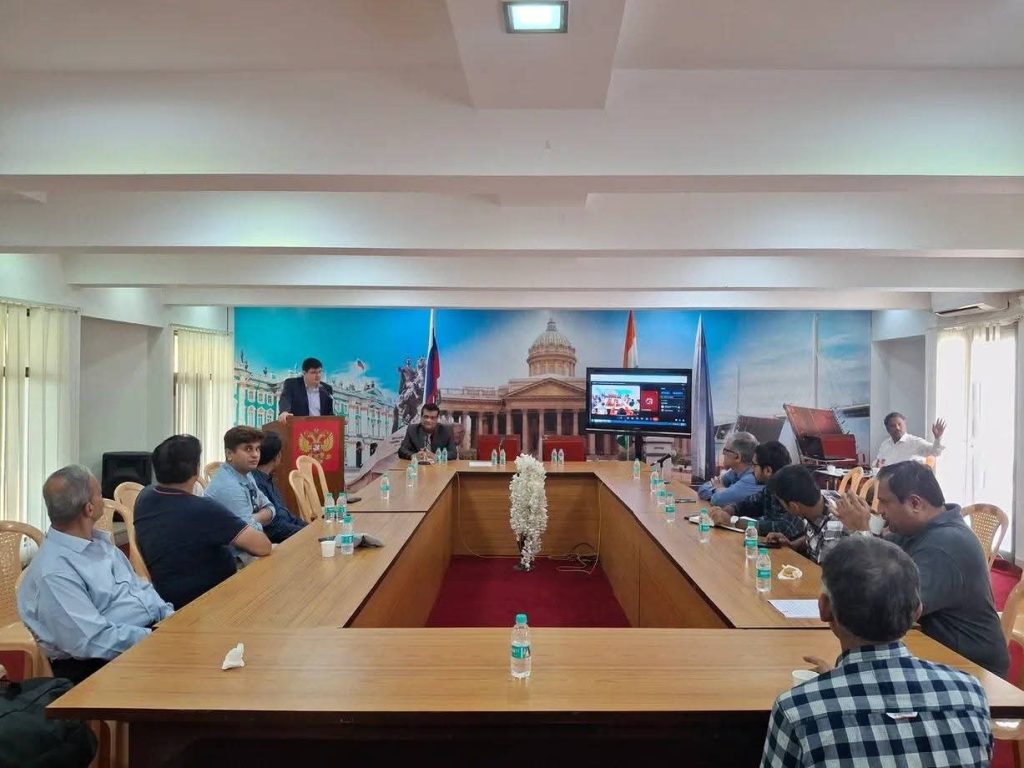
LENTERAMERAH — The Russian House International Relations Club (RHIRC), together with the School of International Relations and Strategic Studies (SIRSS) at the University of Mumbai, held an international conference titled “Revitalizing Strategic Analysis in Changing Global Order” at the Russian House in Mumbai, India, on September 29, 2026.
Held at the Russian Centre for Science and Culture, the conference brought together researchers, academics and international relations observers to examine changes in the global strategic environment from a range of perspectives.
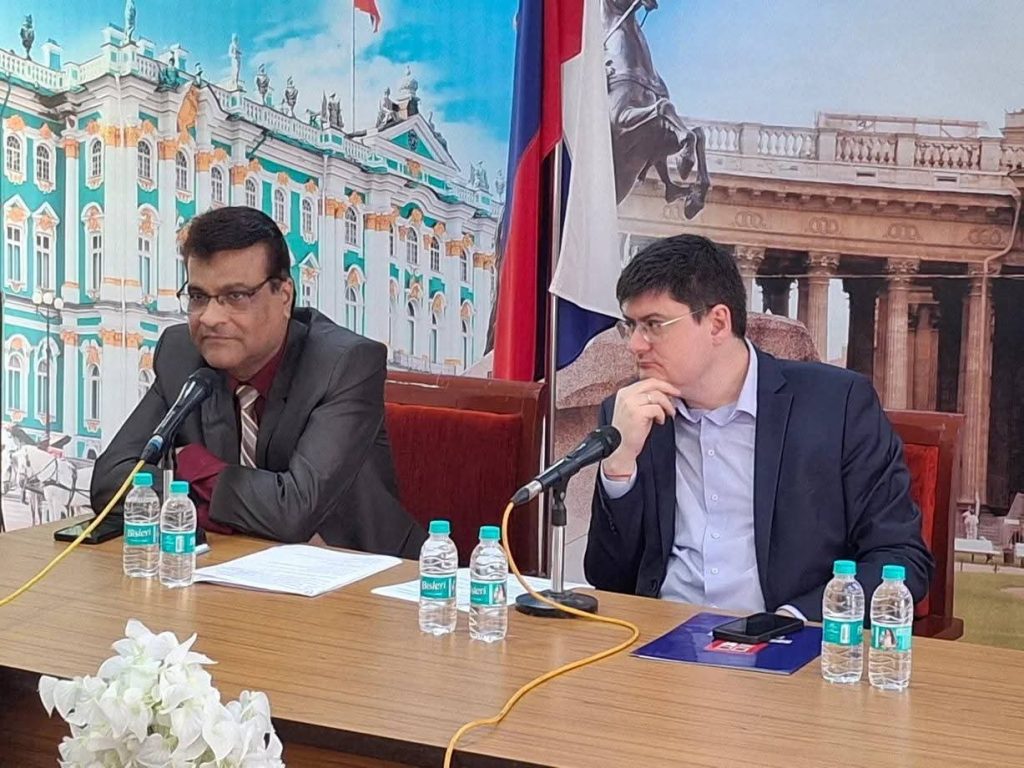
During the opening session, Victor Gorelykh, Director of Russian House Mumbai, delivered remarks highlighting Russia’s victory over Japan in World War II and changes in the global situation. The discussion was followed by Dr. Shoaib Khan, Head of RHIRC, who outlined strategies adopted by different powers in response to changes in the international environment.
From state strategy to artificial intelligence
The papers presented at the conference reflected the breadth of issues covered under the theme of strategic analysis. Naman Atolia, a research scholar at SIRSS, University of Mumbai, examined the strategic hedging of Gulf states between the United States, China and Russia, focusing on Saudi Arabia, the United Arab Emirates and Qatar during the 2017–2026 period.
Naba Khan, a research scholar in the Department of Civics and Politics at the University of Mumbai, examined the Kalmykia–Mumbai textile corridor in relation to non-Western value-chain integration, industrial co-processing and the International North–South Transport Corridor, or INSTC.
The technology dimension was addressed by Prof. Edmund Li Sheng, Distinguished Professor and Mount Tai Chair at Shandong University and the China-SCO Institute of Economy and Trade. He examined artificial intelligence as a new force in global politics and how algorithms are beginning to shape competition among the major powers.
Meanwhile, Prof. Lorenzo Pacini of UniDolomiti in Belluno, Italy, who joined the conference online, discussed an epistemological and methodological shift in strategic analysis in a multipolar world. One of his focuses was the shift from the nation-state model toward a civilization-state approach.
The changing balance of power in the contemporary world was then examined by Amberish Diwanji, a research scholar in the Department of Civics and Politics at the University of Mumbai.
The presentations showed that changes in the global order are not being examined solely through relations between states. Competition among major powers also intersects with the strategies of middle powers, economic corridors, technology, artificial intelligence and changing approaches to understanding political actors within the international system.
A changing world
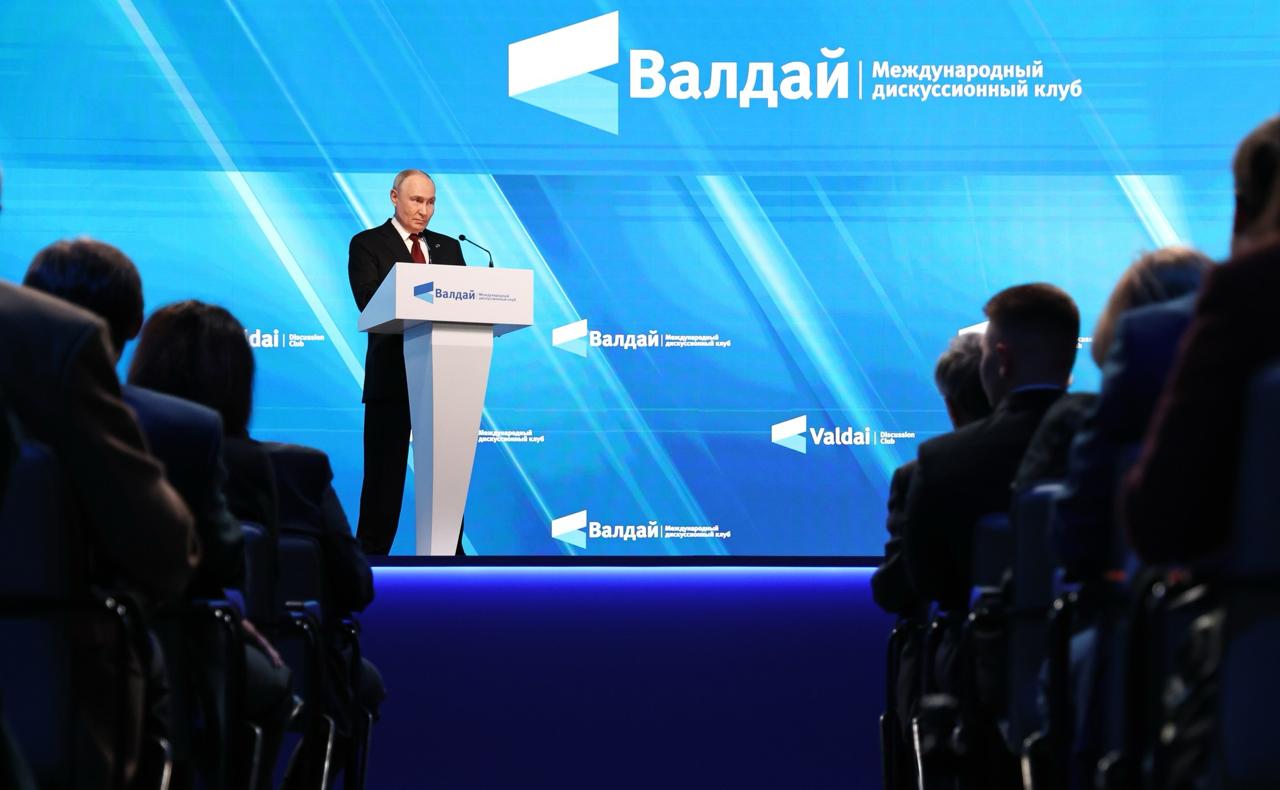
The conference took place against the backdrop of changes in the global balance of power. At the 23rd Annual Meeting of the Valdai Discussion Club in Moscow on October 1, 2026, Russian President Vladimir Putin described the world as entering an entirely new reality.
Putin said that changes in the international order were among the central issues shaping the future. In his view, responsibility for the future was not merely a slogan but had to be translated into practical measures to prevent humanity from being pushed toward the brink of destruction and to avoid irreversible consequences.
Putin said the transformation was taking place alongside a shift from Western hegemony toward a multipolar order. In the long term, he said, this process would lead toward a more stable, democratic and free international system.
At the same time, Putin placed the transition in the context of risks and turbulence. A shift in the centers of power, he said, could become a source of tension when established interests confront a new configuration of power. ***