LENTERAMERAH — The debate over artificial intelligence often stops at the question of whether machines will replace humans. Yet behind the question of jobs lies a more fundamental shift: control over the means of production is moving from factories and machines toward code, algorithms, data, and digital platforms.
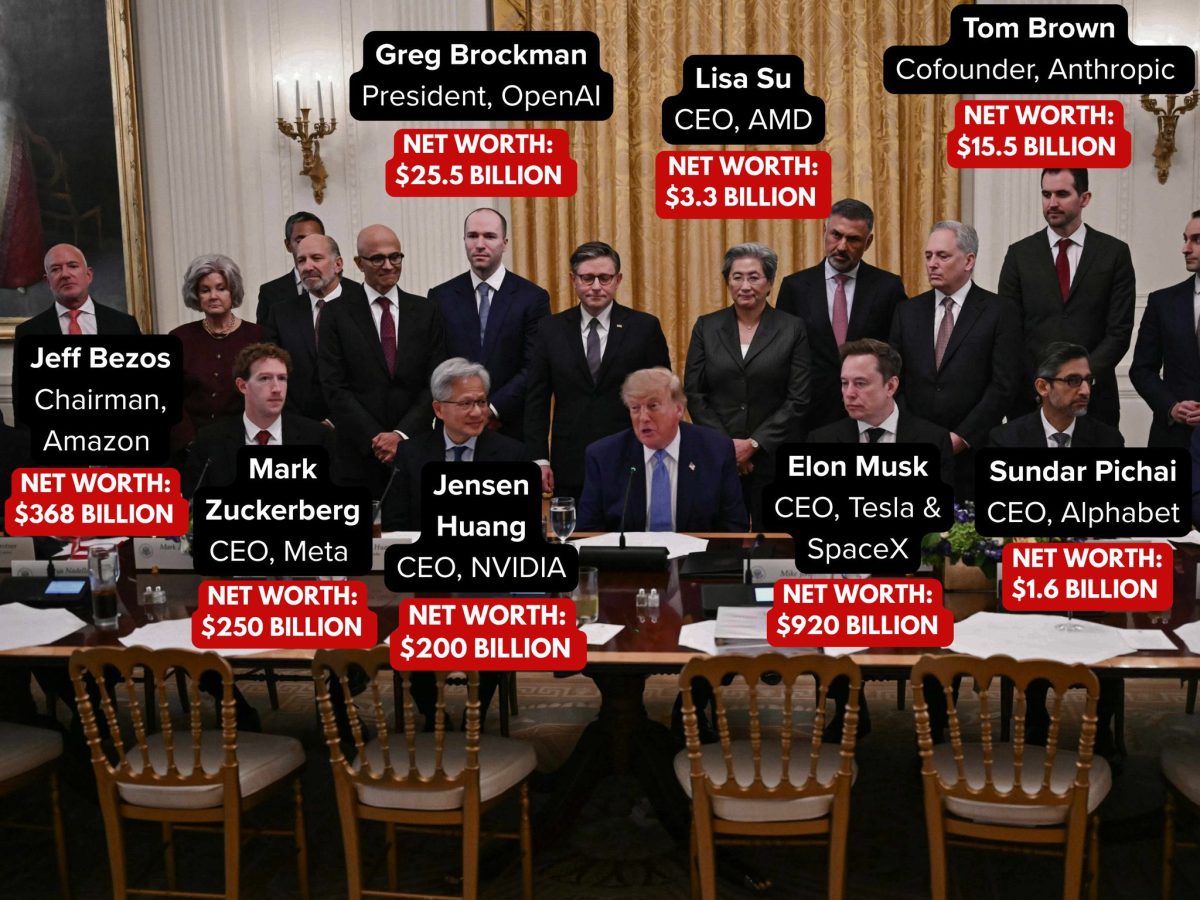
Sergei Syrankov, Secretary General of the Central Committee of the Communist Party of Belarus, discussed this shift in an interview with Pravda published on August 7, 2026. He uses the term “techno-feudalism” to describe a condition in which transnational technology companies and digital platforms control the means of production, channels of information distribution, and the management of public opinion.
In Syrankov’s view, internet users occupy a position similar to peasants living under a feudal system. They use digital infrastructure owned by others, while the personal data generated through their activities becomes a form of rent for platform owners.
The analogy brings the concept of techno-feudalism into the realm of ownership. If land was once the primary source of power under feudalism, data and digital infrastructure can now become a new source of economic power.
From Labor to Code and Algorithms
Separately, Indonesian thinker Bernard Haloho, Executive Director of the Indonesia Democracy Bridge Research Institute (Ind-BRI), sees the development of AI as a more fundamental transformation than the automation brought about by previous industrial revolutions. The Industrial Revolution of the 18th century replaced part of workers’ physical strength with machines. In the 21st century, according to Haloho’s framework, technology is beginning to target human cognitive abilities.
This shift puts white-collar workers such as analysts, programmers, and administrative employees at risk of replacement as well. But the issue does not end with which occupations will be affected.
The more fundamental argument concerns the changing relationship between capital and labor. If capital becomes increasingly capable of generating value without requiring large numbers of workers, the working class loses the position that has traditionally provided the basis for earning an income.
“This is where capitalism undergoes a mutation. Capital is no longer limited to factories and machines, but also takes the form of code, algorithms, and data capable of creating value with increasingly little human intervention,” he said.
According to him, power then shifts toward those who own and control these systems. Machines and AI can generate value with productivity far exceeding that of human labor, while the resulting profits flow to the owners of the technology.
The Global South and Digital Dependency
This transformation carries particular consequences for countries in the Global South. For decades, cheap labor has been one of the economic advantages of developing countries. But as jobs become increasingly easier to automate, that advantage gradually loses its bargaining power.
Fauzan Luthsa, an analyst at Menteng Club, sees the issue as extending beyond whether Indonesia is capable of adopting AI. The question is whether Indonesia has control over the technologies that are becoming the foundation of a new means of production.
“Without control over technology, developing countries may face a new form of dependency: becoming suppliers of data and consumers of technology owned by companies from other countries.”
Under such conditions, both societies and states can become dependent on platforms for work, education, communication, and access to various services, while having no control over the means of production themselves.
When Digital Monopoly Meets the State
Syrankov takes his argument one step further. He distinguishes techno-feudalism from “techno-fascism.”
According to him, techno-feudalism concerns the monopoly of technology giants and digital platforms over the means of production, information, and public opinion. Techno-fascism, meanwhile, emerges when such monopolies ally with state apparatuses to exercise control, censorship, manipulation of public consciousness, and the destruction of sovereignty.
This distinction means that the term techno-feudalism is not merely a criticism of AI. It raises questions about ownership, the distribution of value, and control over infrastructure that increasingly determines people’s lives.
From this perspective, the issue is not simply whether humans will still be needed as AI advances. The more fundamental question is who controls the technology when humans become increasingly dependent on it. ***