By Fauzan Luthsa
Eurasia Geopolitical Analyst, Jakarta
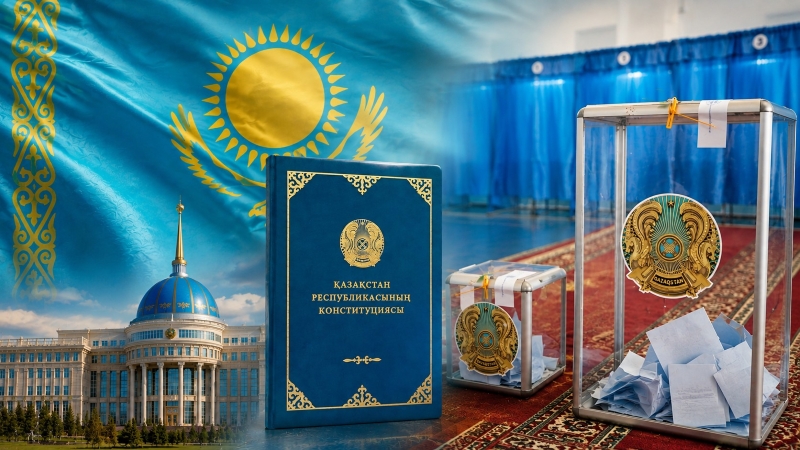
LENTERAMERAH – August 23 was no ordinary moment for Kazakhstan. For the first time, the country put its new Constitution into practice through elections for the Kurultai. Five parties entered the new parliament, while Ädilet secured a large majority. The election result was only one part of a broader change underway.
Kazakhstan is reshaping the way its state works. The President remains at the center of the political system, but the structures carrying out the functions of state power are being expanded. The election was one of the first steps in putting the new design into operation.
Expanding the role of state institutions does not mean that the center of power is shifting away from the presidency.
More Institutions to Support Stability
The Kurultai began its work with a structure, leadership and legislative agenda reflecting Kazakhstan’s increasingly complex needs. Its initial priorities include the Altyn Visa scheme to attract skilled professionals and foreign capital, regulation of digital assets, the use of artificial intelligence in education, and more comprehensive support for children with special needs.
Many of these priorities had already been identified before the new parliament began its work. What has changed is the institution now responsible for processing, overseeing and translating them into legislative work.
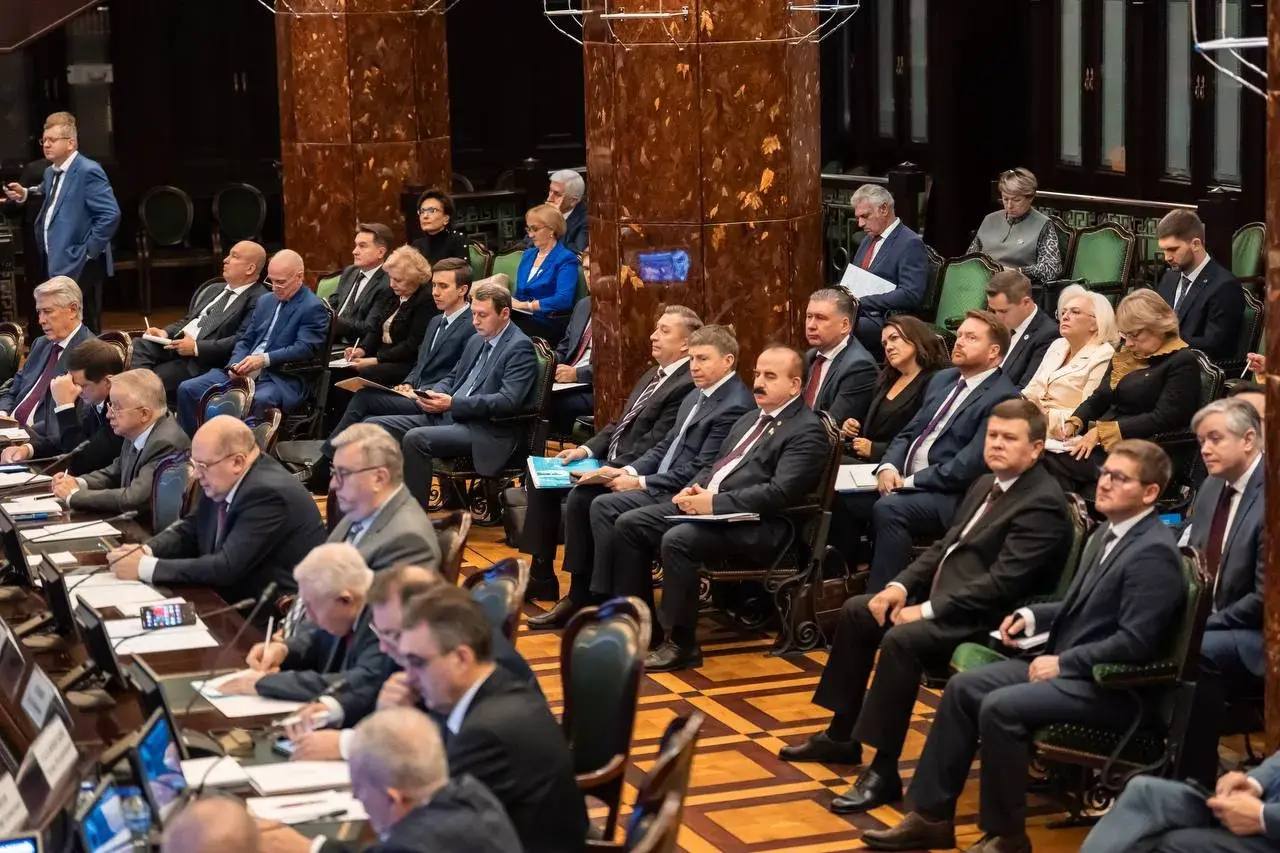
In his address at the opening of the Kurultai’s first session on August 28, President Kassym-Jomart Tokayev offered a broader picture of the body’s responsibilities. The Kurultai is expected to bring legislation into line with the new Constitution, maintain the quality of lawmaking, strengthen oversight and contribute to the renewal of the system of state power.
The election results and the composition of its leadership also show that institutional change is taking place without a dramatic shift in the center of political coordination. Ädilet won a large majority, while Aibek Dadebai, who previously served as Head of the Presidential Administration, became Chair of the Kurultai.
The Kurultai has legislative and oversight functions, but it operates within a system in which the President remains the center of coordination. So why build a new parliament if the center of power is not being moved?
Expanding institutions does not necessarily mean creating competing centers of power. In Kazakhstan, the move can also be understood as an effort to ensure that the country’s stability is less dependent on a single figure.
Building a State Beyond the Era of One Figure
Kazakhstan entered independence under circumstances different from those of several other former Soviet republics. There was no revolution that replaced the entire political elite. Nursultan Nazarbayev, who had already been at the top of the political system during the Soviet period, became the first president of independent Kazakhstan and a figure closely associated with the country’s development.
For three decades, the state and its founding figure moved almost in tandem. That formula provided stability during the formative years, but it also created a vulnerability over the longer term.
The Qandy Qantar events of January 2022 exposed that problem openly. The crisis showed that apparent stability does not necessarily mean that the political structure beneath it is free of vulnerabilities.
Dismantling the centrality of a single figure is far easier than building a system that can function after that figure is gone. A state needs procedures and institutions capable of maintaining continuity when those at the top change. It is in this context that the new Constitution and the Kurultai acquire their significance.
Kazakhstan is also no longer in the position it occupied in the early 1990s. Its economy is increasingly integrated, international investment has become more important, while digital transformation is creating far more complex regulatory challenges. Artificial intelligence, digital assets and changes in the economic structure require the state to deal with issues that are growing both in number and complexity.
The question is not simply who makes decisions, but how capable the state is of implementing and managing them.
Stability Amid Geopolitical Turbulence
Another dimension of the changes can be seen in Tokayev’s address at the opening of the Kurultai’s first session. He placed the renewal of the political system and state institutions in the broader context of Kazakhstan’s ability to adapt to an international environment that is becoming increasingly unstable and unpredictable.
For Kazakhstan, this is not an abstract concern. As the largest country in Central Asia, Kazakhstan sits at the center of an increasingly complex strategic environment. Relations with Russia and China remain important, while interest from other major powers in the region continues to grow. The war in Ukraine has also accelerated changes in the Eurasian strategic environment.
Alternative trade routes between Asia and Europe are becoming increasingly strategic. The Middle Corridor, which runs through Kazakhstan, has seen cargo volumes increase fivefold over six years and has surpassed four million tons per year.
This position creates economic opportunities, but it also increases Kazakhstan’s need to preserve flexibility amid competition among major powers.
Domestic stability under these circumstances is not simply a matter of political order. A state that depends too heavily on personal balances or a particular configuration of elites is more vulnerable when external conditions change rapidly.
The new state framework can serve as a buffer, giving the country more mechanisms to absorb pressure, maintain policy continuity and adapt as its surrounding environment changes, without allowing every disruption to develop into a political crisis.
Kazakhstan’s transformation therefore cannot be understood solely through the question of whether the country is becoming more democratic or more parliamentary. Those measures matter, but they do not fully explain the needs of a state that must remain stable while adapting to changes around it.
A Republic with a New Structure
The Kurultai is not the only change emerging from the new constitutional framework. Erlan Karin has been elected Vice President, while Olzhas Bektenov has been retained as Prime Minister. Kazakhstan is also preparing to establish the Khalyk Kenesi, a high-level consultative body that, according to Tokayev, will represent the country’s ethnic, regional, social and political diversity and will have the right to initiate legislation.
Change is taking place alongside continuity. New structures and mechanisms are being established, but the previous government has not been swept away. The decision to retain Bektenov shows that Kazakhstan’s transformation is not being built through a complete break with the existing system.
What is being reorganized is the relationship between institutions and the distribution of functions within government under the new framework, while preserving continuity where it is considered necessary.
A shift in the center of power is not the only measure of change. State capacity, mechanisms of representation and the means of preserving governmental continuity when pressure comes from within or outside the country are also being reshaped.
The Test of Change
The transformation underway in Kazakhstan is not a dramatic one. There has been no sudden change of regime, and the center of power has not abruptly shifted from the presidency to a new institution.
Kazakhstan is attempting to renew its republican system without breaking the continuity that has been one of the country’s sources of stability for three decades.
Its success will ultimately depend not on the number of institutions created, but on the ability of the system as a whole to deal with economic and technological transformation, the renewal of the political elite, increasingly complex social demands, and an unstable Eurasian geopolitical environment.
The new Constitution can therefore serve a purpose beyond political reform. It provides a basis for the state to absorb pressure, preserve continuity and adapt to change.
The capabilities of these new institutions will only become fully visible when Kazakhstan faces pressures that cannot be predicted. But the direction it has taken already points to an ambition larger than simply resolving today’s political challenges: building a foundation for a state that must confront the challenges of the next generation. ***