The concluding part of Lentera Merah’s exclusive interview with Vitaly Ignatiev looks beyond questions of recognition and protracted conflict to explore how Pridnestrovie sees a changing international order, the future of cooperation across Eurasia, and how the republic and its people hope to be understood by the world.
LENTERAMERAH – For decades, conversations about Pridnestrovie have largely revolved around its political status. Yet for any society, the future is shaped not only by how it is perceived by others, but also by how it understands a world undergoing profound transformation.
As debates over multipolarity, sovereignty, and new frameworks for international cooperation continue to evolve, they raise broader questions about the future of global governance and regional dialogue. Within this changing landscape, how does Pridnestrovie see its own future, and what role does it believe it can play in an increasingly complex international order?
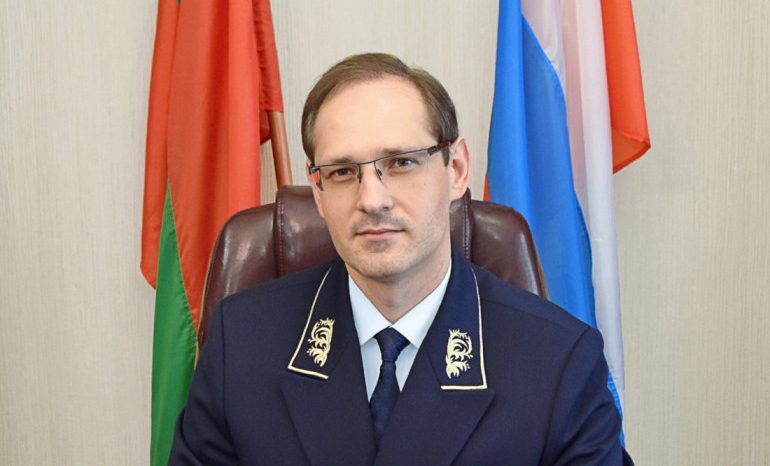
In the concluding part of Lentera Merah’s exclusive interview, Vitaly Ignatiev, Minister of Foreign Affairs of the Pridnestrovian Moldavian Republic, shares his views on these questions, reflecting on Eurasia’s evolving architecture, the principles that should underpin international relations and how he hopes Pridnestrovie will ultimately be understood by the world.
A changing international order has generated not only new challenges but also new ideas about how relations among states should be guided in the years ahead. We therefore began by asking how Pridnestrovie views the principles embodied in the Eurasian Charter and their common ground with the Ten Principles of Bandung adopted at the 1955 Asian-African Conference.
Some analysts argue that the proposed Eurasian Charter on Diversity and Multipolarity represents a normative response to the fragmentation of the current international order, emphasizing principles such as sovereignty, non-interference, equality of states and civilizational diversity. From Pridnestrovie’s perspective, do these principles resonate with the spirit of the 1955 Bandung Conference and the Non-Aligned Movement, despite today’s entirely different geopolitical environment?
For Pridnestrovie, principles such as the equality of participants in international relations, respect for peoples’ right to determine their own future, rejection of coercion and the imposition of political models from outside, and priority given to the peaceful settlement of disputes through dialogue are of particular importance. These are precisely the approaches that have underpinned Pridnestrovian foreign policy throughout the republic’s history.
That is why, in my view, many of the ideas formulated at the Bandung Conference and subsequently developed within the Non-Aligned Movement have not lost their relevance. Even though today’s world differs substantially from the mid-20th-century era, the core problem remains similar and unresolved: how to ensure the coexistence of states and societies with different historical traditions, political cultures, and visions of the future. As practice has shown, attempts to solve this problem through the universalization of a single system of values, or by building a rigid hierarchy of states, have proven not only fruitless but also highly destructive.
It is not surprising that today’s ongoing processes reflect a growing demand from the world community to return to fundamental principles that ensure the stability of international relations, regardless of the dynamics of rivalry among the major powers. And the idea of civilizational diversity promoted by the Eurasian Charter you mentioned appears to deserve serious attention. The world is objectively becoming more complex and polycentric, which means that the stability of the international system will depend on the ability to adapt to this trend rather than ignore it.
Principles alone, however, do not create cooperation. They require institutions capable of translating shared ideas into practical engagement. We therefore asked what characteristics a Eurasian consultative mechanism should possess to earn broader legitimacy and international confidence.
Belarus adopted an official roadmap for the Eurasian Charter ahead of discussions at the United Nations in September 2026. In your view, what characteristics should a truly effective and inclusive Eurasian consultative mechanism have? What is needed for such an initiative to gain broader international legitimacy?
Speaking of the Eurasian space, its key feature is the exceptional diversity of states, political systems, and development models. Consequently, the main added value of the proposed mechanism may lie precisely in creating a permanent platform where different positions have the opportunity to be heard.
In my view, such an architecture could rest on several basic characteristics. First, respect for the sovereign choice of each state. Second, maximum openness to a wide range of participants representing different regions of Eurasia. Pridnestrovie, as an integral part of the post-Soviet and Eurasian space, is for its part also fully prepared to engage in this work. Third, a focus on finding practical solutions in areas where cooperation serves mutual interests regardless of existing political disagreements. This could include infrastructure, ecology, transport, humanitarian exchanges, emergency response, scientific cooperation, digital development, and other areas.
If the mechanism being created can be turned into a functional instrument that meets the characteristics listed above, then one can count on the interest of a wide range of states in participating in it. After all, the modern international system, more than ever, needs additional channels of communication and an expanded space for dialogue and mutually beneficial, conflict-free cooperation.
Beyond diplomacy and international initiatives lies a more personal question. We concluded by asking how Ignatiev hopes Pridnestrovie and its people will ultimately be remembered by the world.
For many years, the world has largely defined the PMR in terms of politics. If the PMR had the opportunity to define itself for the world, how would you like your country and its people to be remembered?
Double standards, geopolitical mindsets, and propaganda myths repeated for decades are factors that prevent the international community from seeing the real picture of Pridnestrovie.
First and foremost, as a unique Pridnestrovian people who managed to unite amid the collapse of the USSR, to withstand the storm of nationalism and Moldova’s military aggression, defending their legitimate interests and restoring their statehood as the legal successor to the Moldavian ASSR and the Moldavian SSR.
As a republic where people of different nationalities have managed to build a multicultural society based on mutual respect and equality. As an established state possessing all the necessary attributes: strong legitimacy, stable institutions, a functioning economy, its own legal system, a mature civil society, and so on. As a responsible and predictable participant in international relations and regional processes, consistently upholding the principles of peaceful good-neighborliness, equal dialogue, and strict fulfillment of its commitments.
I want Pridnestrovie to be known as a country whose people, even under the most difficult circumstances, have for 36 years running fought for the right to determine their own destiny, preserving human dignity, fidelity to peace, and the ability to look to the future with optimism.
The conclusion of this interview does not mark the end of the effort to better understand Pridnestrovie. Through this five-part series, we have sought to offer a closer perspective—from the everyday lives of its people, identity, economy, diplomacy, and aspirations for the future. Ultimately, every society is best understood when we are willing to listen to how its people see themselves and the world around them. ***
Explore the Series
Part 1 — Current Article
Part 2 — Current Article
Part 3 — Current Article
Part 4 — Current Article
Part 5 — Current Article
Full Interview (English)
Full Interview (Russian)