LENTERAMERAH — As geopolitical competition intensifies and the global order becomes increasingly fragmented, Eurasia is assuming a more central role in shaping international politics. Once viewed primarily through the lens of geography, the region has evolved into a strategic arena where connectivity, economic integration, and security architecture increasingly intersect.
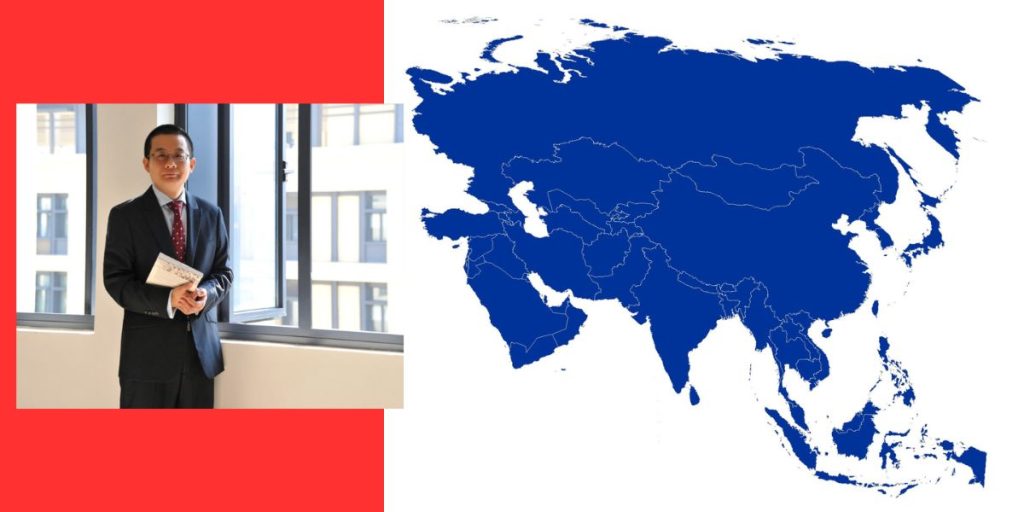
Understanding these transformations requires perspectives grounded not only in theory, but also in years of field research across the region. To explore these developments, Lentera Merah spoke with Prof. Edmund Sheng, Distinguished Professor at Shandong University, whose work on international political economy, Eurasian governance, the Belt and Road Initiative (BRI), and the Shanghai Cooperation Organisation (SCO) has established him as one of China’s leading scholars in the field.
He received several prestigious academic awards in China and Macau. Yet Prof. Sheng’s engagement with Eurasia did not begin with grand strategy. It began with a single research project in Macau.
While studying the inflow of foreign capital into the city in 2014, he gradually came to realise that capital flows were not merely an economic phenomenon, but also a strategic one. What started as research on urban governance eventually expanded into a decade-long intellectual journey spanning the Belt and Road Initiative, the Shanghai Cooperation Organisation, regional integration, and Eurasian governance.
“The turning point came in 2014, when, whilst working on a research project examining the inflow of foreign capital into Macau, I realised that the influx of foreign capital extended far beyond the economic sphere and could pose security risks in a broader context. This research spanned a whole decade and helped me understand that the governance challenges in Macau are, in essence, a microcosm of global geopolitical and economic rivalries.”
— Prof. Edmund Sheng
In this exclusive interview, Prof. Sheng reflects on the evolution of the international order, China’s strategic thinking, the future of Eurasian regional integration, and the opportunities these transformations present for Indonesia.
The following is the full interview.
Could you tell us about your academic journey and how your interest in international relations, geoeconomics and Eurasian affairs first developed?
My academic journey, focused on international relations, began in Macao. The years I spent there sparked a deep interest in the governance challenges faced by cities with a high degree of openness under the “One Country, Two Systems” framework.
The turning point came in 2014, when, whilst working on a research project examining the inflow of foreign capital into Macau, I realised that the influx of foreign capital extended far beyond the economic sphere and could pose security risks in a broader context. This research spanned a whole decade and helped me understand that the governance challenges in Macau are, in essence, a microcosm of global geopolitical and economic rivalries.
This shift in perspective gradually broadened the scope of my research from a single city to more extensive regional and territorial studies—from the Belt and Road Initiative to the Shanghai Cooperation Organisation and even Arctic governance.
Together with my team, we conducted field research in several SCO member states, including Russia and Kyrgyzstan, overcoming language barriers, political uncertainty and difficulties in accessing data. We developed robust quantitative models to assess the scale of the “shadow economy” and conducted extensive interviews in the SCO Demonstration Zone in Qingdao (Shandong Province, China), systematically identifying the “mismatches” in local economic and trade cooperation.
Read more Future of Multipolar World Takes Shape as Unipolar Era Fades Says Dr Shoaib Khan
A New International Order
For decades, the international order has been shaped by institutions and norms established in the aftermath of the Second World War. In your view, are we witnessing a process of reforming that existing order, or the emergence of an entirely new international architecture?
The prevailing trajectory is neither a clean rupture nor a linear reform of the post-1945 institutional framework, but rather a gradual transition toward a polycentric system characterized by institutional layering. The established architecture remains nominally intact, yet its functional efficacy is increasingly circumscribed by the rise of supplementary mechanisms that better reflect contemporary shifts in material capabilities. Consequently, we are observing a hybrid order where legacy institutions coexist with emergent platforms, resulting in a more fragmented but arguably more representative distribution of agency.
Eurasia is increasingly viewed not merely as a geographical space, but as an increasingly integrated strategic region. From China’s perspective, what serves as the primary driving force behind this integration—economic interests, security considerations or a shared political vision?
From Beijing’s vantage point, economic statecraft remains the principal catalyst for Eurasian integration. While security imperatives and political narratives provide essential context, the underlying driver is the rational pursuit of market access, supply chain optimization, and energy security. The construction of transcontinental infrastructure serves to internalize external markets, effectively shrinking logistical distances between inland Chinese provinces and European consumer bases. This economic logic precedes and enables subsequent political alignment, rather than the inverse.
SCO and BRI
Many observers regard the Shanghai Cooperation Organization (SCO) as one of the key pillars of the emerging multipolar order. Over the past two decades, the SCO has evolved into one of the most comprehensive platforms for regional cooperation across Eurasia. In your view, what distinguishes the SCO from other regional organizations and how do you see its role evolving in the years ahead?
The Shanghai Cooperation Organization distinguishes itself through its strict adherence to the principles of sovereign equality and non-interference in domestic affairs. Unlike Euro-Atlantic security structures that often predicate membership on regime type or value convergence, the SCO functions as a pragmatic forum for issue-specific collaboration. Its future evolution will likely involve deeper institutionalization in non-traditional security domains, particularly counter-terrorism and energy transit security, thereby solidifying its role as a stabilizing mechanism within a multipolar environment.
The Belt and Road Initiative (BRI) has now entered its second decade. From your perspective, how has the BRI transformed connectivity and regional integration across Eurasia? Has it evolved beyond an infrastructure initiative into a broader geoeconomic and geopolitical instrument?
The Belt and Road Initiative has undeniably transcended its initial characterization as a mere infrastructure financing scheme. Having matured into its second decade, it now operates as a comprehensive geoeconomic framework that standardizes trade facilitation protocols, digital governance norms, and industrial capacity cooperation. It functions as a form of spatial planning on a continental scale, embedding participating states within a network of physical and regulatory dependencies that collectively reshape regional economic geography.
How do you view the relationship among the SCO, BRICS, the Belt and Road Initiative and the concept of the Greater Eurasian Partnership? Do you see these initiatives gradually converging into a more integrated strategic architecture, or will they continue to function as complementary but distinct mechanisms?
These frameworks exhibit a high degree of functional complementarity rather than formal convergence. The SCO provides the security umbrella, the BRI furnishes the connective hardware, BRICS expands the financial toolkit, and the Greater Eurasian Partnership offers the overarching geopolitical narrative. They operate as distinct yet mutually reinforcing pillars of a broader strategic architecture. Maintaining their autonomy while enhancing inter-institutional coordination allows for flexibility, preventing the sclerosis often associated with overly integrated supranational bureaucracies.
Amid intensifying global economic competition, supply chains, technology, energy, and infrastructure have increasingly become instruments of geopolitical influence. In your view, how will these geoeconomic dynamics shape the future of Eurasia over the next one or two decades?
Geoeconomic dynamics will drive a fundamental restructuring of Eurasian political economy over the next two decades. As technology and supply chains become securitized, we anticipate the emergence of resilient regional value chains designed for redundancy rather than pure efficiency. This will likely entrench a competitive coexistence model, wherein states leverage energy transit routes and technological standards as instruments of statecraft. The primary challenge will be managing the friction between great power competition and the collective necessity of maintaining open channels for commerce and climate action.
The Eurasian Charter
Some analysts argue that the Eurasian Charter represents a normative response to the fragmentation of today’s international order by emphasizing principles such as sovereignty, non-interference, and civilizational diversity. In your opinion, do these principles resonate with the spirit of the 1955 Bandung Conference and the Non-Aligned Movement, despite today’s very different geopolitical context?
The Eurasian Charter draws clear intellectual lineage from the Bandung Conference, specifically the emphasis on sovereign agency amidst bipolar or multipolar tension. While the contemporary context lacks the explicit colonial backdrop of 1955, the underlying sentiment of resisting external normative imposition remains resonant. Both frameworks prioritize procedural justice and civilizational pluralism over substantive ideological conformity, offering a normative counterweight to universalist claims that often mask hegemonic interests.
Belarus has adopted an official roadmap for the Eurasian Charter ahead of discussions at the United Nations in September 2026. In your view, what would a truly effective and inclusive Eurasian Consultative Mechanism look like? What conditions would be necessary for such an initiative to gain broader international legitimacy?
For a Eurasian Consultative Mechanism to attain genuine legitimacy, it must prioritize inclusivity and tangibility. It should avoid replicating the hierarchical structures of 20th-century alliances by ensuring that middle and small powers possess genuine veto power over issues directly affecting their sovereignty. Furthermore, its mandate must extend beyond high politics to address quotidian challenges such as customs harmonization, pandemic response, and climate migration. Legitimacy will accrue not from declaratory statements in New York, but from demonstrable improvements in the daily governance of cross-border interactions.
Read more Esen Usubaliev on the Future of Central Asia in a Changing World Order
Indonesia, ASEAN and Eurasia
Indonesia has traditionally viewed Eurasia primarily through bilateral relations with individual countries rather than as a single strategic region. In your opinion, what opportunities might Indonesia be overlooking if it continues to approach Eurasia in this way?
Indonesia’s current bilateralist approach risks overlooking the systemic advantages of continental-scale engagement. By failing to conceptualize Eurasia as an integrated strategic space, Jakarta limits its ability to act as a convening power. The failure to engage with multilateral frameworks like the SCO or the BRI in a holistic manner means Indonesia misses opportunities to shape the regulatory standards governing digital trade and green finance that will inevitably affect its economic interests.
Indonesia is China’s largest partner in Southeast Asia and the largest economy in ASEAN. What strategic role do you believe Indonesia could play in strengthening connectivity between ASEAN and the various mechanisms of cooperation emerging across Eurasia?
Indonesia possesses the demographic weight and economic centrality to serve as the indispensable southern anchor of Eurasian connectivity. Its strategic role should involve championing maritime-digital corridors that link Southeast Asian production networks with Eurasian overland routes. By leveraging its leadership within ASEAN, Indonesia can advocate for interoperability standards that bridge the institutional gap between regional blocs, effectively translating continental ambitions into archipelagic realities.
Indonesia–China relations have long been driven by trade, investment and infrastructure development. Do you believe both countries should place greater emphasis on cooperation in education, research, think tanks and people-to-people exchanges? Why do you consider these areas important in the emerging multipolar era?
Diversifying the bilateral agenda to include education, research and think tank collaboration is imperative for strategic resilience. Economic linkages are susceptible to cyclical downturns and geopolitical shocks, whereas epistemic communities create durable bonds of trust. In a multipolar era defined by contested narratives, joint research initiatives in critical technologies and sustainability provide a buffer against zero-sum thinking, fostering a shared intellectual ecosystem that supports long-term stability.
Looking ahead to 2040, what do you believe is the most realistic future for Eurasia? Do you see the region emerging as one of the principal centers of global governance, or remaining primarily an arena of strategic competition among major powers?
By 2040, Eurasia is poised to function as a decentralized center of gravity in global governance, rather than a monolithic bloc. The region will likely oscillate between cooperative integration and managed competition. Its defining feature will be institutional multiplicity, where authority is dispersed across overlapping mechanisms. While it may remain an arena for strategic rivalry, the density of intra-regional trade and investment will likely impose significant constraints on the escalation of conflict, making it a zone of constrained competition rather than outright confrontation.
What message would you like to share with Indonesian policymakers, academics, and the younger generation about the importance of understanding Eurasia and the profound changes currently reshaping the international order?
To Indonesian policymakers and the younger generation, the contemporary reorganization of the international order is not an abstract phenomenon occurring in distant capitals. It is manifesting in the infrastructure projects, digital standards, and educational exchanges that will define your professional lives. Understanding Eurasia requires moving beyond traditional geopolitics to grasp the complex interplay of economic connectivity and normative contestation. Invest in the linguistic skills and regional expertise necessary to navigate this complexity, for Indonesia’s future prosperity hinges on its ability to act as a deliberate architect within this evolving landscape rather than a passive recipient of external trends. ***