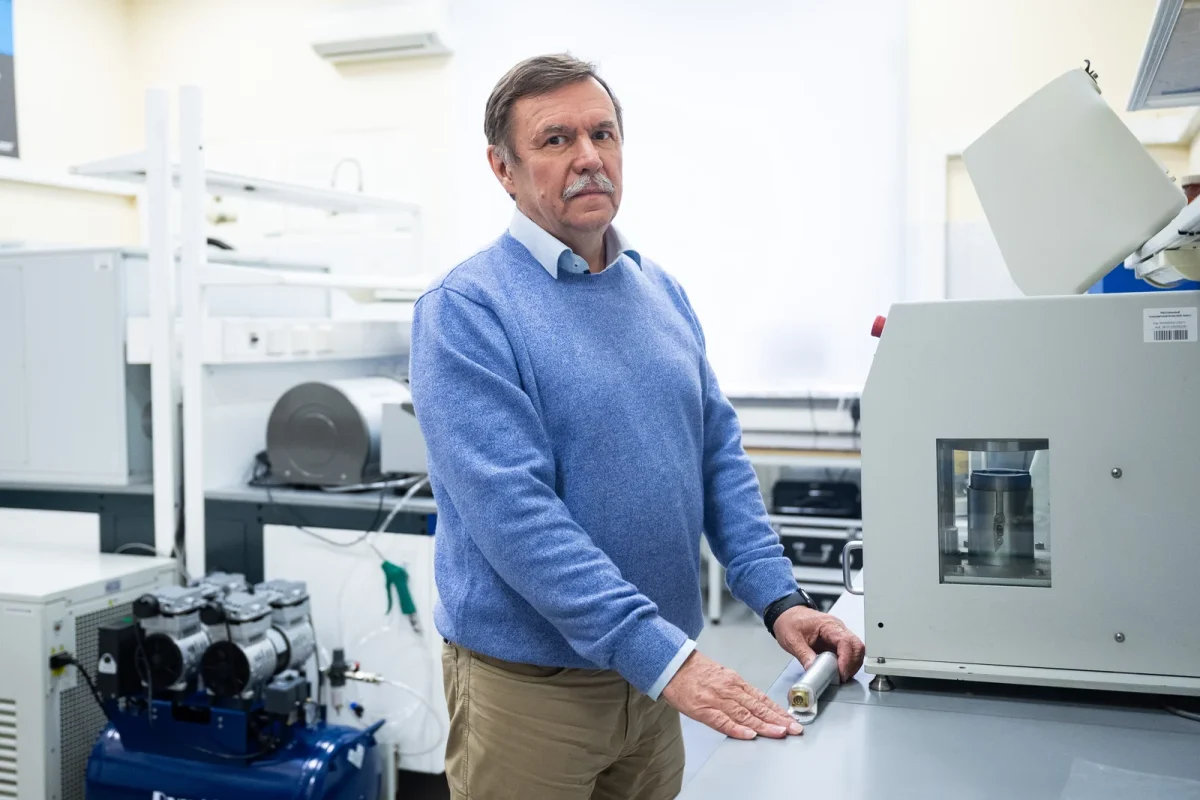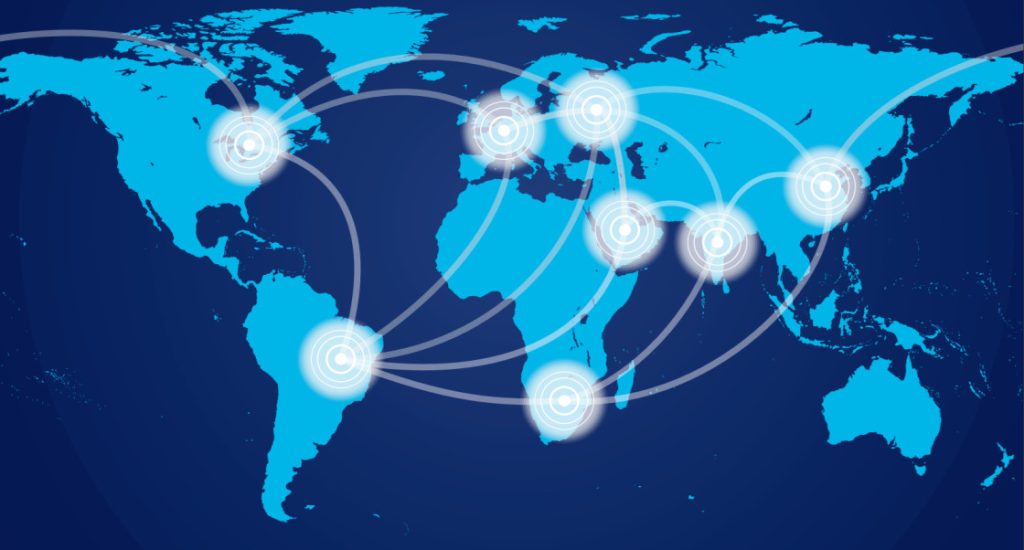
LenteraMerah continues its exclusive interview with Russian political scientist Prof. Andrey Gorokhov by examining the Eurasian Charter as an emerging framework for a changing international order, and asking where Indonesia’s own political and geopolitical traditions fit within the shift toward multipolarity.
LENTERAMERAH – For decades, the international order has largely been discussed through institutions, rules and concepts developed in the West. The emergence of the Eurasian Charter raises a different question: can a changing international system produce its own framework around sovereignty, diversity and multipolarity?
In this third part of the interview, Prof. Andrey Anatolievich Gorokhov, PhD in Political Science, Editor-in-Chief of Russian Political Science since 2016 and Chairman of the Laboratory of Humanitarian Projects, turns to Indonesia and its own political and geopolitical traditions. He discusses Pancasila and Wawasan Nusantara, before examining their intellectual connection with Bandung and the emerging Eurasian Charter.
Before examining the Eurasian Charter itself, Gorokhov first turns to Indonesia’s own political thought and asks whether countries of the Global South should develop geopolitical traditions of their own.
Many countries of the Global South, including Indonesia, are seeking to preserve their strategic autonomy amid the growing rivalry among great powers. From the perspective of Russian political thought, should these countries continue to act primarily as strategic balancers, or should they begin to develop their own independent geopolitical traditions?
I must admit that I have not yet studied Indonesian political thought in full, and this is a shortcoming, as our countries are actively interacting.
I am deeply convinced that modern political science should not be confined solely to the Western canon. We need to pay great attention to the heritage of such unique countries as Indonesia. For example, I am very interested in the concept of “Pancasila” — the five fundamental principles of your statehood: belief in one supreme God, a just and civilized humanity, the unity of Indonesia, democracy based on discussion, and social justice for all. Among the thinkers, I would single out your founding fathers — Sukarno, with his theory of “marhaenism,” which combines socialism and national traditions, and Mohammad Hatta, as an outstanding architect of the independent state.
As for geopolitical traditions, the concept of “Wawasan Nusantara” (“Archipelagic Vision”) is a brilliant example of a distinctive Indonesian school of thought. She views the country not as a fragmented scattering of islands, but as a single entity: a combination of land, sea, air, and even the space above the archipelago. It seems to me that the potential for extrapolating this idea to global processes is enormous. Unlike the classical Western geopolitics of the last century, which rigidly opposed Land and Sea, your concept of “Wawasan Nusantara” inherently resolves this conflict. It offers the world a model of unity among all peoples on lands and oceans that are common to us all, where water bodies act as connecting arteries rather than barriers.
From Indonesia’s own political tradition, the conversation moves to the wider international framework. Gorokhov places the Eurasian Charter within a longer intellectual trajectory connected to Bandung and the Non-Aligned Movement, while emphasizing the different geopolitical conditions of the present.
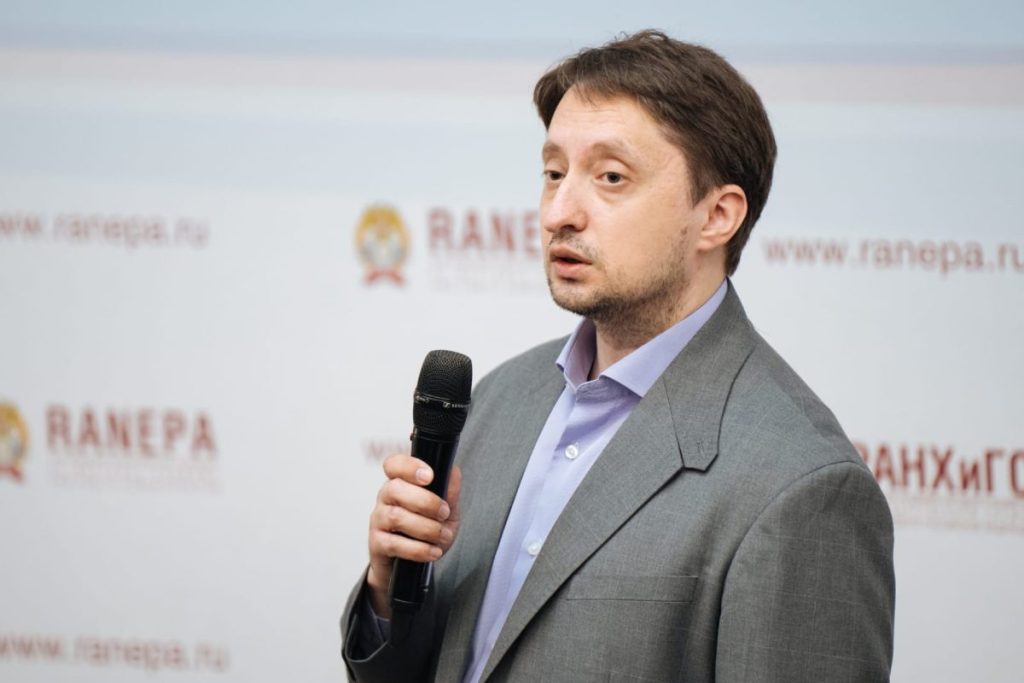
Some analysts argue that the Eurasian Charter represents a normative response to the fragmentation of the modern international order, emphasizing sovereignty, non-interference, equality, and civilizational diversity. In your view, to what extent do these principles resonate with the spirit of the 1955 Bandung Conference and the Non-Aligned Movement, despite the completely different geopolitical realities of today?
Indeed, the Eurasian Charter on Diversity and Multipolarity in the 21st century today serves as a normative response to the fragmentation of the world order and is a direct intellectual legacy of the 1955 Bandung Conference. If we turn to the text of the final Bandung declaration, we will see almost verbatim coincidences: it enshrines “non-interference in internal affairs” and “equality of races and nations.” These same ideas formed the basis of the Non-Aligned Movement. However, there is a fundamental difference in the context. In 1955, the focus was on the struggle of young states in Asia and Africa against classical colonialism and racism.
Today’s realities are different: now the struggle is not against visible colonialists, but against invisible neocolonialism — the dictate of globalist institutions, sanctions pressure, and attempts to impose a single value model. Therefore, the spirit of Bandung is alive, but the object of resistance has changed. Back then, they fought for the right simply to be a state, while today Russia and the countries of the Global South are fighting for the right to be sovereign centers of power.
However, it is necessary to take into account that the finalization of the text of the Eurasian Charter on Diversity and Multipolarity in the 21st Century is planned to be completed by October 2027. The agreed version of the charter is expected to be submitted for consideration at the summit of Eurasian leaders, which is tentatively scheduled for October–November 2027 in Minsk. Therefore, the final text of the charter may be adjusted, but the spirit of Banduga will most likely be preserved in it.
The connection to Bandung also raises a broader question about how the Eurasian Charter could move from an intellectual proposition into an international process. For Gorokhov, that process is already taking shape around a proposed negotiation framework involving Belarus, Russia and other Eurasian states.
Read More
- Russian House Mumbai and the Geopolitics of a Changing World
- South Ossetia Through the Eyes of Its Foreign Minister
- Transnistria Today with Foreign Minister Vitaly Ignatiev
Belarus has developed a roadmap to promote the Eurasian Charter ahead of discussions at the United Nations. What, in your view, would a truly inclusive Eurasian consultative mechanism look like? What principles, institutional mechanisms, and preliminary conditions are necessary for such a mechanism to gain broad legitimacy and international support?
Indeed, the official launch of negotiations on the development of the Eurasian Charter of Diversity and Multipolarity is scheduled at the UN for September 2026 in New York. This was recently stated by the Ambassador of Belarus to Russia, Yuri Seliverstov. The consultative mechanism has already been clearly presented and publicly outlined:
First, until September 2026, Belarus and Russia will be actively working — through briefings — to form a group of Eurasian states that will participate in the negotiation process.
Second, this group of states will officially launch the charter process in September 2026 in New York.
Thirdly, the first round of negotiations will take place by the end of 2026.
Fourthly, subsequent rounds will be held in the capitals of other interested states.
Fifthly, Belarus, as the initiator of the charter idea, has declared its readiness to chair the negotiation process. At the same time, Belarus has indicated the possibility of co-chairing with another state that wishes to share this function with us.
Sixthly, Belarus and Russia are working on the initial text — the zero draft of the charter. This document will be sent to the partners after the process is launched in September.
The negotiation process is planned to be completed by autumn 2027, and the charter text will be submitted for consideration at the Eurasian leaders’ summit, which is scheduled to be held in Minsk in October–November 2027.
If all the planned actions are implemented, the document may gain broad legitimacy and international support.
The discussion of the Eurasian Charter also brings the conversation back to Russia itself — its resilience, its political transformation, and the forces that Gorokhov believes have shaped its return as a major geopolitical power. ***
Explore the Series
- Part 1 — Russian Political Thought Behind Strategic Continuity
- Part 2 — How Ideas Shape Russian Political Strategy
- Part 3 — Indonesia and the Eurasian Charter in a Changing International Order
- Part 4 — Russia’s Resilience and the Return of a Major Geopolitical Power
- Part 5 — Russia, NATO and the Risk of a Wider European War
- Full Interview — Inside Russia’s Political Mind