LenteraMerah continues its exclusive interview with Russian political scientist Prof. Andrey Anatolievich Gorokhov by examining the political, institutional and economic foundations of Russia’s resilience, and how Moscow’s experience has shaped its vision of a multipolar world.
LENTERAMERAH – Russia’s return as a major geopolitical power raises a question beyond leadership and economic recovery. What changed inside the country after the turbulence of the 1990s, and what allowed Russia to withstand the pressures that followed?
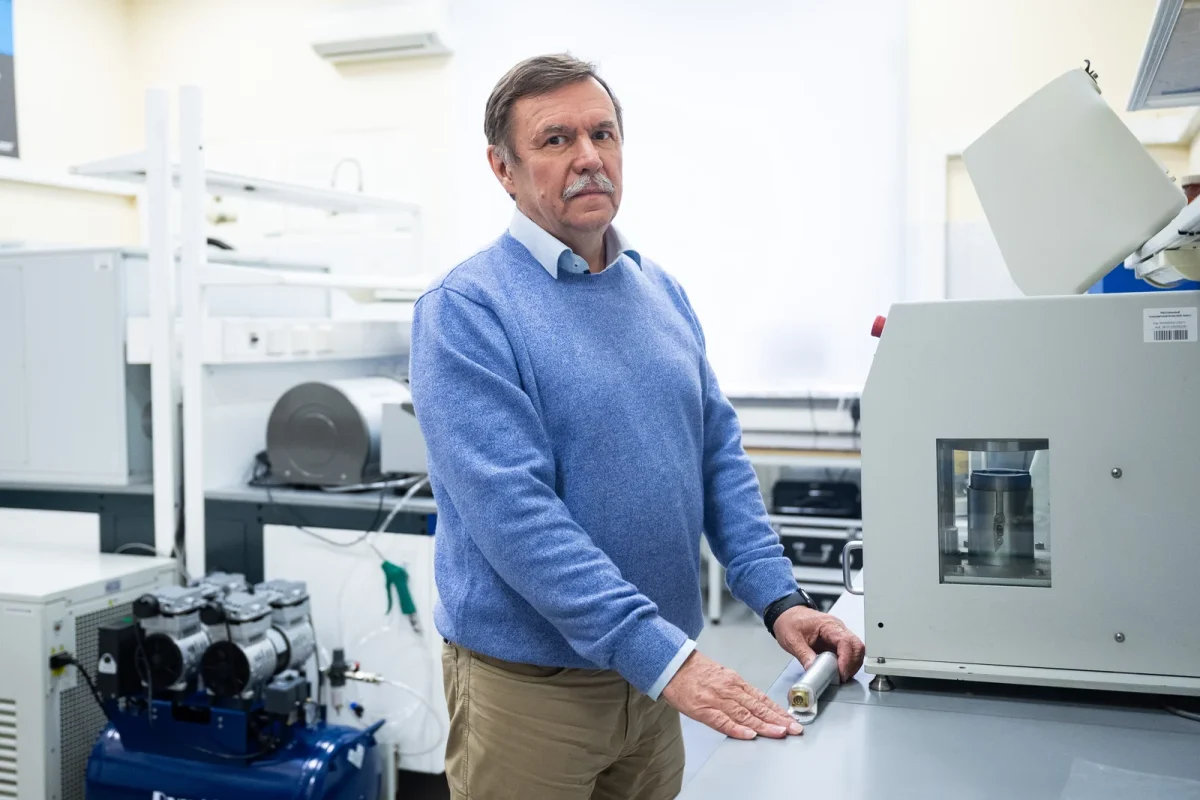
For this part of the interview, Prof. Andrey Anatolievich Gorokhov, PhD in Political Science, Editor-in-Chief of Russian Political Science since 2016 and Chairman of the Laboratory of Humanitarian Projects, discusses the institutional consolidation, political choices and economic foundations that he sees behind Russia’s resilience. He also places that trajectory within Russia’s broader turn toward a multipolar international system.
Gorokhov begins with the institutional changes that, in his view, helped restore the coherence of the Russian state after the 1990s.
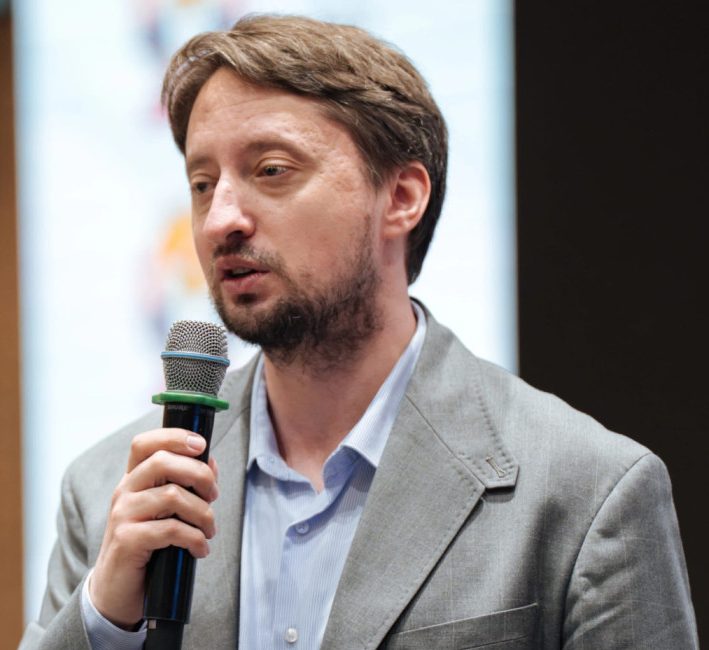
In the 1990s, many observers believed that Russia had entered a period of irreversible decline. However, three decades later, it has once again become one of the main geopolitical players in the world. In addition to leadership and economic recovery, what intellectual, political, or institutional transformations, in your opinion, have contributed most to Russia’s revival?
Here, several initiatives can be identified that were implemented in the late 20th and early 21st centuries.
First, this was the formation of the “power vertical” in the early 2000s — the creation of federal districts, the reform of the Federation Council, and the alignment of regional legislation with federal law. Without the creation of a unified political and legal space, the country might not have preserved its unity.
Second, Russia deliberately moved away from blindly copying Western democratic standards, which had led to chaos in the 1990s. A national party system was established, and parties that received popular support received state funding. And thirdly, the Russian geopolitical process began to take into account not only the orientation towards the West but also other centers of the world. Russia began to support the creation of international structures that promote the development of a multipolar world and Eurasian integration — these are the SCO, the EAEU, the CSTO, and BRICS+.
Institutional change is only part of the explanation. Gorokhov also sees Russia’s historical experience as central to how the country understands state power, sovereignty and its position between Europe and Asia.
Read More
- Russian House Mumbai and the Geopolitics of a Changing World
- South Ossetia Through the Eyes of Its Foreign Minister
- Transnistria Today with Foreign Minister Vitaly Ignatiev
Many people understand Russia primarily through the lens of war, sanctions, and geopolitical rivalry. In your opinion, if someone sincerely wants to understand Russia more comprehensively, which aspect is most often overlooked? Is it Russia’s intellectual traditions, historical experience, political values, or something else?
Russia has a vast heritage — Pushkin, Mendeleev, Gagarin… Yes, its military greatness is also immense. Russia and all the Soviet republics paid a price for the Victory over Nazism that the West cannot even imagine. Imagine what the world would have been like if the USSR hadn’t saved it during World War II?
And now, the new generation of the West, whose grandfathers allowed Nazism to happen, wants revenge and a “strategic defeat” of Russia. Have they dared to aim for world domination? I’m afraid this crown will crush them.
But do you know what they completely overlook? Russia’s historical path. Russia built its state at the crossroads of Europe and Asia. They’ve always tried to conquer us — sometimes from the West, sometimes from the East. The yoke, world wars, the Cold War… In this context, it was understood that for peoples to survive, the state must be strong. Therefore, I am increasingly inclined to the concept of Russia as a state of civilizations — a state that protects different peoples, representatives of different civilizations, from destruction and gives different peoples the opportunity to develop. And in this understanding, Russia is the guarantor of security in the Eurasian space. Therefore, Eurasian security cannot exist without taking Russia’s position into account.
That historical perspective leads directly to the question of resilience under sustained external pressure, particularly the relationship between sanctions, economic capacity and social cohesion.
Over the past few years, Russia has faced unprecedented economic sanctions, diplomatic isolation, and geopolitical pressure from the West. Nevertheless, it has maintained a relatively high degree of political and social stability. In your view, what factors best explain this resilience?
Russia’s resilience to unprecedented pressure is not a matter of chance; it is the result of three fundamental factors: historical memory, economic sovereignty, and social cohesion.
First, our historical “immunity” to isolation has worked. Russia built a state with a strong foundation to withstand attempts to wear us down. As Russian President V. Putin noted, the West set a world record for the number of sanctions, but they turned out to be largely ineffective precisely because we were prepared for such a scenario.
Secondly, there is a strict macroeconomic policy and a real sector. Russia has resources, factories, and food, which creates the basis for economic sovereignty.
And thirdly, there is the social factor. At the moment of an existential threat, Russian society demonstrated the highest level of consolidation. When we are under pressure from all sides, Russians do not break but gather into a fist. This cohesion has become Russia’s main shield.
The discussion now moves from Russia’s internal resilience to the external security order around it — and to Moscow’s increasingly stark assessment of Europe, NATO and the future of European security. ***
Explore the Series
- Part 1 — Russian Political Thought Behind Strategic Continuity
- Part 2 — How Ideas Shape Russian Political Strategy
- Part 3 — Indonesia and the Eurasian Charter in a Changing International Order
- Part 4 — Russia’s Resilience and the Return of a Major Geopolitical Power
- Part 5 — Russia, NATO and the Risk of a Wider European War
- Full Interview — Inside Russia’s Political Mind