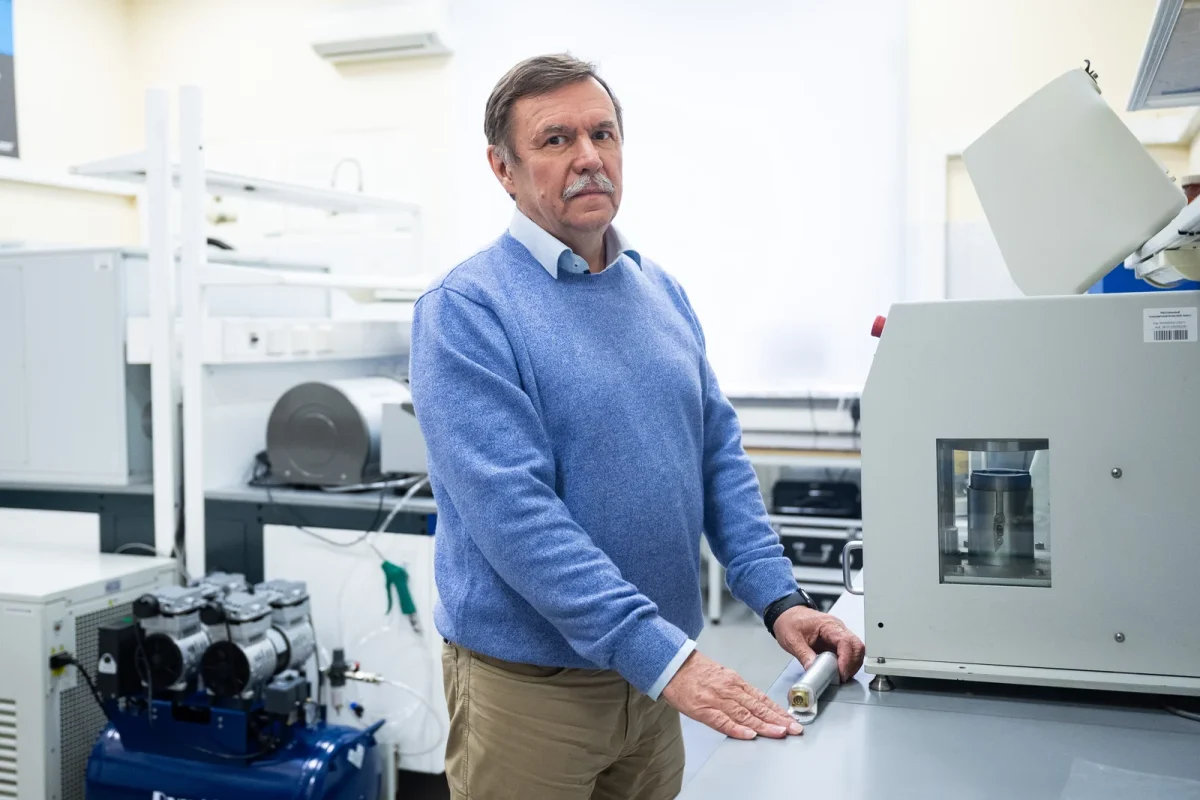
In the final part of this interview series, LenteraMerah speaks with Prof. Andrey Anatolievich Gorokhov about Russia-NATO tensions, the war in Ukraine, the changing European security environment and Moscow’s vision for a future security framework.
LENTERAMERAH – Russia-NATO tensions are entering a more dangerous phase as the war in Ukraine continues and its effects spill over into the wider European security environment. As Brussels and European countries strengthen their military preparedness, Moscow argues that the security architecture long dominated by the West is increasingly losing its ability to preserve stability.
These developments raise the prospect of direct confrontation between Russia and NATO, while also posing a more fundamental question: can Europe’s current security architecture still prevent escalation, or has it itself become part of the problem?
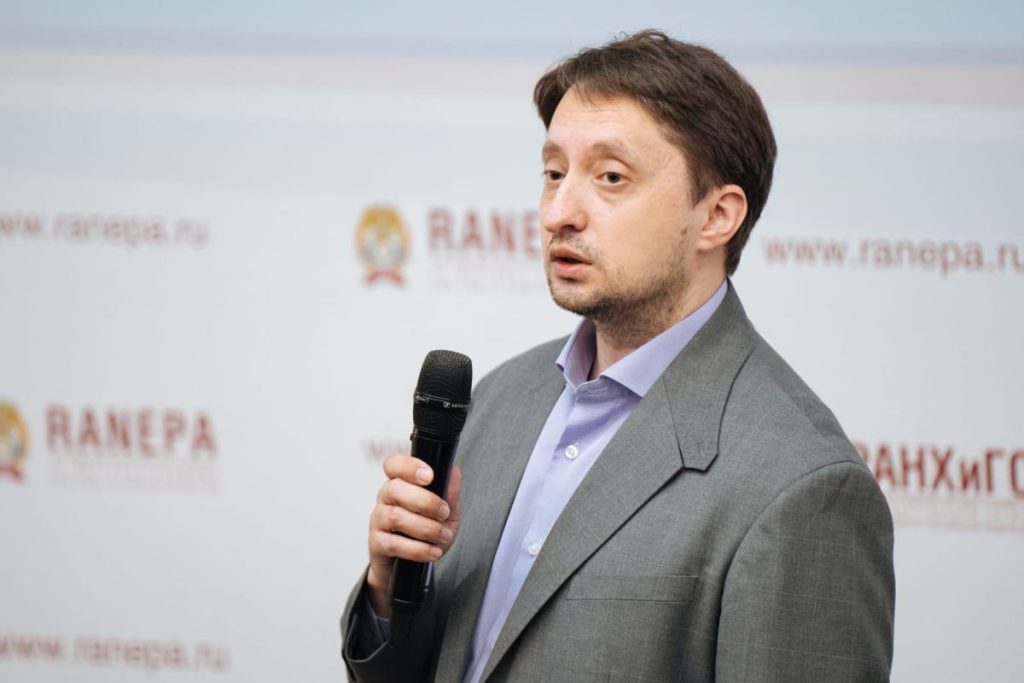
In this final part of the interview, Prof. Andrey Anatolievich Gorokhov, PhD in Political Science, Editor-in-Chief of Russian Political Science discusses how these developments are understood from the perspective of Russian political thought.
Relations between Russia and NATO, as well as the European Union, have continued to deteriorate in recent years, while relations with the United States have seemed relatively more stable under the current administration of President Trump. At the same time, several NATO officials have warned of a possible direct confrontation with Russia in the coming years. How are these events understood from the perspective of Russian political thought, and what consequences do they have for Russia’s broader vision of European security?
In recent years, a fundamental shift has been observed in the architecture of European security. The European Union is rapidly transforming into a military-political bloc in the image and likeness of NATO. For example, the EU plans to mobilize up to 800 billion euros to strengthen the defence sector as part of the “Rearm Europe” programme. And this is no longer just rhetoric — it’s the real militarisation of the continent. Paris is promoting the idea of a pan-European “nuclear umbrella”, while London is returning to its traditional anti-Russian stance.
In 1975, a unique consensus was signed in Helsinki: a de-escalation of tensions in exchange for recognition of the post-war realities in Europe. Today, this “Helsinki spirit” has been completely destroyed. The European dialogue, which assumed respect for the security of all participants without exception, has been sacrificed to the narrow corporate interests of the Euro-bureaucracy. The same countries that for decades demanded that Moscow respect human rights and promote openness have themselves turned into a closed media and political bloc where any dissent is suppressed and foreign policy is reduced to serving the interests of NATO’s military-industrial complex.
At the same time, the thesis that the escalation of fear of an “imminent war” serves only as a justification for increasing budget expenditures on the defense of Western countries is merely an oversimplification. However, to reduce everything solely to lobbying by the military-industrial complex would be an oversimplification. For Russia, the response is a necessary measure to ensure its sovereignty. Russia is being forced to respond in kind in order to neutralize the real threats near our borders. And yes, part of the Western strategy did indeed involve an attempt to force Russia to focus exclusively on the military budget, thereby reducing social spending and provoking internal tension. This tactic failed: the Russian economy adapted, maintaining macroeconomic stability despite increased spending on security.
As for relations with the United States, their relative stabilization under the Trump administration can be attributed to Washington’s pragmatism. American policy has shifted its focus to the Middle East and to the global containment of China. However, at the same time, American weapons, albeit via Europe, are still reaching Ukraine, thereby prolonging the conflict. Therefore, it would be incorrect to say that the Trump administration has become more pro-Russian. The US is acting in its own national interests and in the interests of American corporations. The conflict in Ukraine and the conflict with Iran will allow American oil and gas companies to generate super-profits thanks to new consumers both in Europe and in Asia. I won’t name the amounts — they are available online; anyone interested can take a look.
Read More
- Russian House Mumbai and the Geopolitics of a Changing World
- South Ossetia Through the Eyes of Its Foreign Minister
- Transnistria Today with Foreign Minister Vitaly Ignatiev
It’s important to understand a few points here:
First. There is no longer any direct interaction between Russia and NATO. In the alliance’s documents, Russia is officially defined as a “direct and long-term threat,” so any cooperation is ruled out by definition.
Second. Russia has stopped viewing the EU as a negotiable entity. Unfortunately, there is no dialogue. A return to normal dialogue with Europe is possible only after the replacement of the elites there with nationally oriented ones who will be able to restore the subjecthood of their states instead of transferring it to an unaccountable Brussels.
The third. Russia is a nuclear power, and any direct aggression against it is guaranteed to lead to catastrophic consequences. Does the world need to bring the situation to this point? Obviously not. At the same time, Russia does not threaten anyone. But NATO has moved closer to Russia’s borders. Therefore, Russia is forced to respond to the new realities that have developed with European security.
And the last thing I would like to mention is: Today, it is obvious that the old security architecture, created in the era of the bipolar world or Western domination, has finally exhausted itself. She failed to prevent conflicts and only perpetuates inequality.
The West’s attempts to ensure its own security by weakening Russia and containing China have led the world to a dangerous dead end. The old institutions, above all NATO, do not guarantee security; unfortunately, on the contrary, they create new threats.
Therefore, the discussion should not be just about new agreements, but about changing the very paradigm. A functioning mechanism for de-escalation is needed. And it is likely that a new treaty on global security and new international institutions guaranteeing the implementation of these agreements are needed.
A new global security agreement should guarantee the rejection of unilateral sanctions, the protection of critical infrastructure, and respect for civilizational diversity. At the same time, without the participation of Russia, China, India, and other BRICS countries, any document on global security will remain a fiction. Therefore, dialogue is necessary, and such a dialogue can probably be initiated in the format of expert and scientific discussions, which may subsequently encourage diplomats and politicians.
For Gorokhov, the issue is no longer simply how Russia and the West can manage their confrontation, but whether the existing security system can still prevent a wider conflict. ***
Explore the Series
- Part 1 — Russian Political Thought Behind Strategic Continuity
- Part 2 — How Ideas Shape Russian Political Strategy
- Part 3 — Indonesia and the Eurasian Charter in a Changing International Order
- Part 4 — Russia’s Resilience and the Return of a Major Geopolitical Power
- Part 5 — Russia, NATO and the Risk of a Wider European War
- Full Interview — Inside Russia’s Political Mind