In Part II of this exclusive interview, Prof. Andrey Gorokhov examines how political ideas move into state strategy, the intellectual roots of Russia’s multipolar course, and emerging ideas in Russian political science.
LENTERAMERAH – LenteraMerah continues this exclusive interview series with Russian political scientist Prof. Andrey Gorokhov by looking beyond Russia’s political decisions to examine the intellectual machinery behind them, from the institutions and expert communities involved in shaping policy to the ideas that eventually enter state strategy.
The discussion moves from the relationship between political institutions and intellectual circles to the strategic concept of a multipolar world. Gorokhov also discusses what he sees as an emerging field of “social architecture” and why he believes developments in Russian political science remain largely overlooked outside the country.
The previous part examined the historical foundations of Russian political thought and the role of leadership in maintaining strategic continuity. The next question moves one step deeper, asking how political ideas actually travel from academic and political circles into the machinery of the state.
Your career is unique in that you have worked in academic circles, political institutions, and scientific publishing houses. Based on this experience, how are political ideas transformed into state strategy in Russia? What role do universities, political parties, scientific journals, think tanks and government agencies play in this process?
Yes, I worked in the apparatus of a political party and at a university, and for the past 10 years I have been involved in publishing a journal; I continue to interact with academic circles within the framework of educational projects and programs. Different experiences help to view political processes from different perspectives. This is useful, especially for political scientists.
In Russia, the government has never relied exclusively on the bureaucratic apparatus or coercive resources. In intellectual terms, the government is in dialogue with several key groups of influence. The first group consists of technocrats who view politics as the management of complex processes. This includes representatives of the executive branch and systemic political parties. The second group comprises ideologues and experts from the academic community, think tanks, and specialized media. They shape the conceptual framework and lead the discussion about the country’s future. And today, a third group is actively taking shape — social architects who are responsible for long-term public projects. These circles often overlap, but it is their synthesis that determines the intellectual component of the political course.
If we talk about ideas, a serious concept often goes from discussion to law or decree. The idea of “sovereign democracy” led to the creation of a political system protected from external funding and interference. And the idea of protecting the Russian world became the moral foundation for making decisions regarding Crimea, Donbas, and Novorossiya. Finally, there is the concept of the “state-civilization.” It is officially enshrined in the Concept of the Foreign Policy of the Russian Federation, approved by a presidential decree in March 2023. This document formalized Russia’s positioning as a unique center of global development alongside other civilizations.
That answer describes a process in which political concepts are not confined to academic debate but can become part of state policy. The next question turns to one of the most consequential ideas in contemporary Russian strategy — the move toward a multipolar international order — and asks how much of that choice comes from Russia’s own intellectual traditions.
Read More
- Russian House Mumbai and the Geopolitics of a Changing World
- South Ossetia Through the Eyes of Its Foreign Minister
- Transnistria Today with Foreign Minister Vitaly Ignatiev
Outside Russia, the country’s geopolitical decisions are often interpreted primarily as a response to external threats or pressure. In your view, to what extent is Russia’s strategic choice actually determined by the evolution of its own political thought and intellectual traditions?
One of the strategic decisions of modern Russia is the move towards a multipolar world. And this decision is not just a coincidence, but the result of the profound intellectual work of Russian political thinkers. Therefore, Russia’s multi-vector policy is a direct consequence of both our unique geopolitical position between Europe and Asia and our academic school. Yevgeny Maksimovich Primakov played a key role here. In his programmatic article in the journal “International Life” in October 1996, he identified the transition to multipolarity as the main trend in global development. He also proposed the idea of a strategic triangle: Russia — India — China, as a way to stabilize relations in the Eurasian region.
It is also impossible not to mention such a theorist as Sergei Karaganov, with his concept of a “state-civilization” and Russia as a “civilization of civilizations.” Karaganov is also one of the authors of the term “Greater Eurasia,” which implies a continental system of interstate relations in Eurasia based on trust and a universal desire for security.
Therefore, Russia physically cannot become a satellite of the West, no matter how much Washington or Brussels might want it. This would contradict not only our geographical position, which unites the peoples of Eurasia, but also the entire paradigm of our political thought.
The reference to Primakov, Karaganov, multipolarity, and Greater Eurasia points to an established intellectual tradition. But the discussion does not stop with ideas that have already shaped Russia’s strategic course; it also raises the question of what new concepts could influence the country over the coming decade.
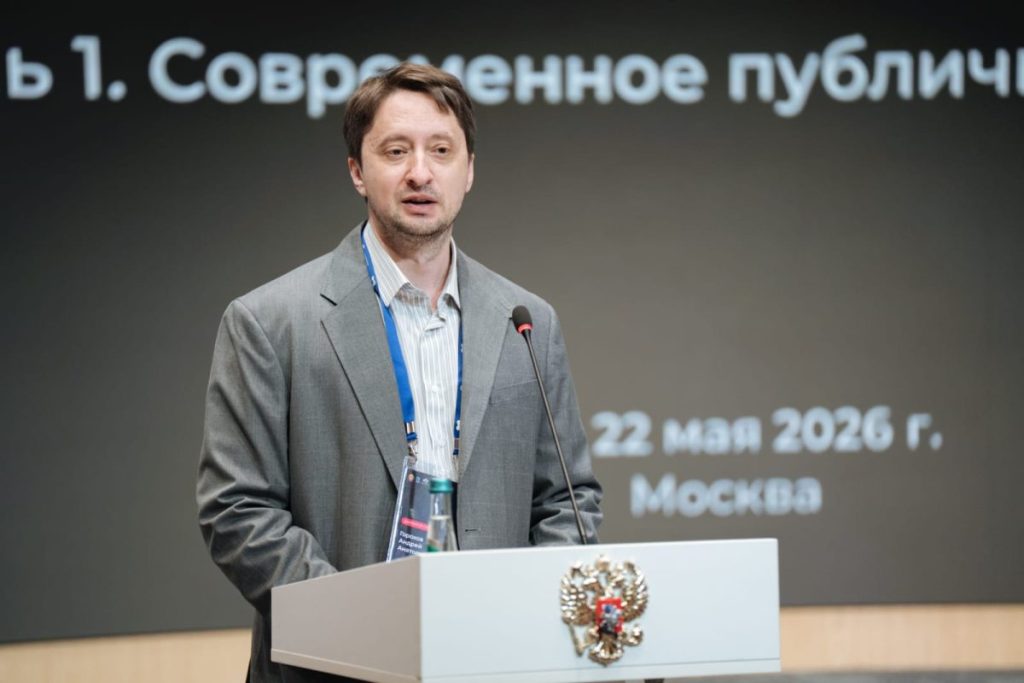
As the editor-in-chief of the Russian Political Science Journal, you have a unique opportunity to observe the discussions among Russian political scientists. What new ideas or intellectual paradigms, in your opinion, are most likely to shape Russia’s political development over the next decade, yet will largely go unnoticed by the outside world?
Western academic circles traditionally prefer to ignore the potential of Russian political science. Moreover, Clarivate Analytics (the British owner of the Web of Science database) has effectively blocked Russian scholars’ access to publications and patents. In April 2025, they went further — they closed their Russian division, Clarivate Analytics (Rus). But that’s their choice. As I’ve already said, dictate and the unwillingness to hear other voices is a historical tradition of the West itself.
But it is precisely in the humanities and political science that Russia today offers the world its own unique response — a rapidly developing field of social architecture. This is no longer just an analysis of society, but its conscious construction. To put it simply, the essence of this field is the transition from a reactive approach to designing the future. It examines how stable social institutions are created, and how shared values and horizontal connections can achieve long-term consolidation of the country.
Does the outside world notice this? Russian academic and scientific circles are open to dialogue. Despite sanctions, foreign researchers come to Russia. In December 2025, the first international conference “Social Architecture: Theory and Practice of Social Change” was held in St. Petersburg. Six hundred experts from 27 countries discussed what the West is trying to ignore. This is a powerful signal: Russia’s intellectual isolation is failing. And Russia cannot be isolated.
In the next part of this exclusive interview series, the conversation moves beyond Russia’s domestic intellectual landscape to Indonesia, the Global South, and the possible links between the Eurasian Charter, the Bandung Conference, and a changing international order. ***
Explore the Series
- Part 1 — Russian Political Thought Behind Strategic Continuity
- Part 2 — How Ideas Shape Russian Political Strategy
- Part 3 — Indonesia and the Eurasian Charter in a Changing International Order
- Part 4 — Russia’s Resilience and the Return of a Major Geopolitical Power
- Part 5 — Russia, NATO and the Risk of a Wider European War
- Full Interview — Inside Russia’s Political Mind