What lies behind Russia’s increasingly confrontational relationship with the West? In this exclusive full interview, Prof. Andrey Gorokhov discusses the historical experiences, political ideas and strategic calculations that shape Moscow’s view of power, sovereignty and the emerging multipolar order.
LENTERAMERAH – The conflict between Russia and the West is no longer only about Ukraine. It is increasingly a struggle over who gets to define the rules of European security, what sovereignty means, and whether the institutions built under Western dominance can still govern the international system.
From Moscow’s perspective, the problem goes deeper. The post-Cold War security architecture has not merely failed to accommodate Russia; according to Prof. Andrey Anatolievich Gorokhov, Editor-in-Chief of Russian Political Science it has become part of the mechanism producing confrontation.
That argument carries consequences far beyond the Russia-NATO dispute. If the existing security architecture is exhausted, as Gorokhov argues, the alternative is not simply another treaty between Russia and the West. It means renegotiating the principles of international security itself — including sanctions, critical infrastructure, civilizational diversity and the role of Russia, China, India and other BRICS countries.
This is where the interview becomes strategically significant.
Gorokhov takes us from Russia’s historical relationship with the West to the intellectual foundations of Moscow’s political strategy, from the Eurasian Charter to Russia’s economic resilience, and finally to the increasingly dangerous confrontation with NATO.
Here’s the full conversation.
In your view, did the confrontation between Russia and the West fundamentally change Russian political thought, or did it simply accelerate intellectual trends that had been developing for decades?
It seems to me that when people talk about the confrontation between Russia and the West, it is often an attempt to explain and justify the West’s aggressive policy towards Russia and Russophobia. Let me explain. It was not Russia that expanded the NATO bloc, and now it borders Russia, thereby creating tensions in relations. Russia does not supply weapons and military equipment to countries that shell Western cities and kill citizens of Western countries. But the opposite is happening. Western weapons are being fired at Russian cities and Russian citizens. And Russian citizens are dying from these weapons almost every day. I think you’ve figured out that I’m referring to the Russian‑Ukrainian conflict. If it weren’t for NATO’s expansion and the West’s support of Russophobia and Ukraine’s aggressive policy in Donbas from 2014 to 2022, there would be no conflict.
Therefore, it is correct to speak of the West’s centuries‑old hostility towards Russia and Russian culture. Precisely, of the centuries‑old hostility. For many centuries now, Western elites and intellectuals have been engaged in Russophobia, shaping a negative, hostile image of Russia and Russian culture.
I will give a few examples: the 16th century. Sigismund von Herberstein (1486-1566), an Austrian diplomat and statesman, and an envoy of the Holy Roman Empire of the German Nation, carried out diplomatic missions to Muscovite Rus’ in 1517 and 1526. In 1517, his mission was to mediate in peace negotiations between Moscow and the Grand Duchy of Lithuania. Herberstein failed to persuade Vasily III to relinquish Smolensk in favor of the Lithuanian principality. Smolensk remains a Russian city to this day. According to one version, which is particularly held by the modern Russian historian Natalia Tanshina. And she writes that it was precisely because his mission failed that he began to explain it by saying that “the Russians are people with whom it is supposedly impossible to reach an agreement.” This is reflected in his treatise “Notes on Muscovy,” which was published in 1549 and became extraordinarily popular. Under Herberstein’s pen, instead of “genuine Christian rulers,” Russian rulers appeared before the Western reader as the embodiment of all human vices. He interprets slavery as a quality inherent in the Russians. Thanks to the diplomat’s authority and numerous reprints, it was this book that fundamentally changed Europe’s view of Muscovite Rus’ and laid the foundation for the widespread opinion about “Russian tyranny.”
Also in the 15th century, the Polish diplomat and historian Jan Długosz (1415–1480) made a significant contribution to shaping a negative view of Russia in his 12‑volume work on the history of Poland, “Annals, or Chronicles of the Great Kings of Poland” (Latin: Annales seu chronicae incliti Regni Poloniae). Długosz’s work was written in Latin — the language of international communication among scholars of that time — so his work was widely circulated in Europe. Thanks to this, the Polish perspective on the history of Rus’ gained traction in Europe. But Długosz was addressing a quite pragmatic task — he needed to substantiate the claims of the Polish elites to dominance in the region. And hence the negative attitude towards Rus’ (Russia at that time).
Look, why do they need this demonized image? It’s all extremely cynical. They need a scare story in order to plunder their own budget under the guise of military spending and to form military‑political alliances against us. You can’t just chalk up military budgets to a good neighbor. And when you’re shouting from every screen that the Russians are coming, you yourself look like a savior hero. Convenient, isn’t it? Only it’s a lie. The second part of the problem is total ignorance. For them, Russia is a blank spot on the map, inhabited by bears from 19th‑century newspaper caricatures. Few of them have ever been on this side of the border, but everyone has read Russophobic articles. Therefore, we have to explain the obvious, delving into the historical roots of this phenomenon. We understand: nothing changes over the centuries. Even the fact that the USSR sacrificed millions of its citizens’ lives to pull Europe out of the Nazi abyss is now being silenced. Behind the veil of this hatred, the victims of Soviet Russia and the feat of Soviet Russian soldiers are simply inconvenient for them.
Yes, Russia borrowed a lot from the West. But let’s look deeper. Russian culture and the Christian West share common spiritual roots — these are traditional Christian values. Therefore, the current aggression does not stem from a conflict of values. It is based on a cold geopolitical calculation. Look at NATO’s expansion to the East — this is a direct move towards our borders, aimed at provoking a conflict and gaining access to Russian resources. Moreover, the West needs our geographical position as a springboard for exerting pressure on Asian powers.
What is the fundamental difference in our approach? Russia has never been a classic colonial empire. Russia had no colonies in Africa, America, or Asia. Russia did not engage in the slave trade. Russia expanded its territories in a different way, drawing peoples into its orbit. The West simply doesn’t understand Russia — how one can be great without racism and slavery. Since the West is oriented towards dictate. And today, this colonial instinct manifests itself absolutely openly in the pressure exerted on Russia, Iran, Venezuela, China — on everyone who refuses to play along.
In Russia, many thinkers from previous eras vividly demonstrated the differences between Russia and the West – yes, such an intellectual tradition exists, but this tradition never fostered aggression towards the West. This never happened.
For example, in the 19th century, the Slavophiles (A. S. Khomyakov, I. V. Kireyevsky, K. S. Aksakov, Yu. F. Samarin) developed the idea of Russia’s unique identity. Nikolai Yakovlevich Danilevsky (1822–1885), a cultural theorist, sociologist, philosopher, publicist, and one of the founders of the civilizational approach in history, wrote in his book Russia and Europe: “The fact is that Europe does not recognize us [the Russians] as its own.” She sees in Russia and in the Slavs in general something alien to her, and at the same time something that cannot serve as mere material from which she could derive her own benefits… Europe therefore sees in Rus’ and in Slavdom not only something alien, but also something hostile. No matter how loose and soft the upper, outer layer, which has weathered and turned into clay, may be, Europe still understands—or, more accurately, instinctively feels—that beneath this surface lies a strong, solid core that cannot be crushed, ground down, or dissolved—and which, consequently, cannot be assimilated, cannot be transformed into its own blood and flesh—and which has both the power and the claim to live its own independent, самобытной life.
Surprisingly, it’s a fact: after the War of 1812, the Russian elite continued to speak French for a long time. In Russia, there is a fundamental distinction between the aggressive intentions of Western governments and the great legacy of Western culture. We continue to read their books, listen to their music, and communicate with scholars. Dictate and cultural blockade are foreign to us. It is Russia’s ability to absorb different traditions, peacefully combining dozens of nationalities and religions, that makes our state resilient.
To briefly answer your question, today’s aggressive policy of the West does not significantly affect the centuries‑old Russian culture, of which political thought is a part, since the current wave of aggression by some Western political elites is nothing new. This happened in 1812, 1941, during the Cold War, and now. Yes, and I would like to emphasize that it is precisely part of the Western political elite that holds Russophobic views, since there are representatives of the Western political and intellectual world who understand the significance and contribution of Russia and Russian culture to the development of the entire world and who understand the detrimental nature of aggressive policies against Russia.
Gorokhov’s explanation of Russia’s confrontation with the West leads to a deeper question: what sustains the strategic continuity behind Moscow’s political course?
In many countries, a change of government is often accompanied by significant changes in national strategy. However, Russia appears to have maintained considerable strategic continuity over several decades. In your opinion, what supports this continuity? Does Russian political thought play a greater role than political institutions or individual leaders?
The special role of the leader in Russia indeed has deep historical roots. For centuries, our state has developed as a monarchical one, and the ideal of a strong ruler has become the foundation of our political culture. This is not just a tradition; it is part of our intellectual code. If we turn to the works of the classics of Russian thought, we will see a whole galaxy of philosophers who have justified this path. Nikolai Karamzin, in his famous “Memorandum on Ancient and Modern Russia,” explicitly called autocracy the only salvation for the country. Later, Count S.S. Uvarov formulated the famous triad: “Orthodoxy, Autocracy, Nationality.” And Lev Tikhomirov, in his work “Monarchical Statehood” (late 19th – early 20th century), defined monarchy as “the supreme power of a moral ideal.” Therefore, it is not surprising that today the vector of Russia’s development — both internal and external — is inextricably linked to the figure of the national leader. During the Soviet period, this role was fulfilled by the General Secretaries; before them, it was the monarchs. Now, the head of state is the President of Russia, Vladimir Putin. The government, meanwhile, carries out enormous work, but it always acts within the framework of the strategic course set by the top leader. History shows that when this link weakens — as happened with Nicholas II in 1917 — the state is put at risk.
Your career is unique in that you have worked in academic circles, political institutions and scientific publishing houses. Based on this experience, how are political ideas transformed into state strategy in Russia? What role do universities, political parties, scientific journals, think tanks, and government agencies play in this process?
Yes, I worked in the apparatus of a political party and at a university, and for the past 10 years I have been involved in publishing a journal; I continue to interact with academic circles within the framework of educational projects and programs. Different experiences help to view political processes from different perspectives. This is useful, especially for political scientists.
In Russia, the government has never relied exclusively on the bureaucratic apparatus or coercive resources. In intellectual terms, the government is in dialogue with several key groups of influence. The first group consists of technocrats who view politics as the management of complex processes. This includes representatives of the executive branch and systemic political parties. The second group comprises ideologues and experts from the academic community, think tanks, and specialized media. They shape the conceptual framework and lead the discussion about the country’s future. And today, a third group is actively taking shape — social architects who are responsible for long‑term public projects. These circles often overlap, but it is their synthesis that determines the intellectual component of the political course.
If we talk about ideas, a serious concept often goes from discussion to law or decree. The idea of “sovereign democracy” led to the creation of a political system protected from external funding and interference. And the idea of protecting the Russian world became the moral foundation for making decisions regarding Crimea, Donbas, and Novorossiya. Finally, there is the concept of the “state‑civilization.” It is officially enshrined in the Concept of the Foreign Policy of the Russian Federation, approved by a presidential decree in March 2023. This document formalized Russia’s positioning as a unique center of global development alongside other civilizations.
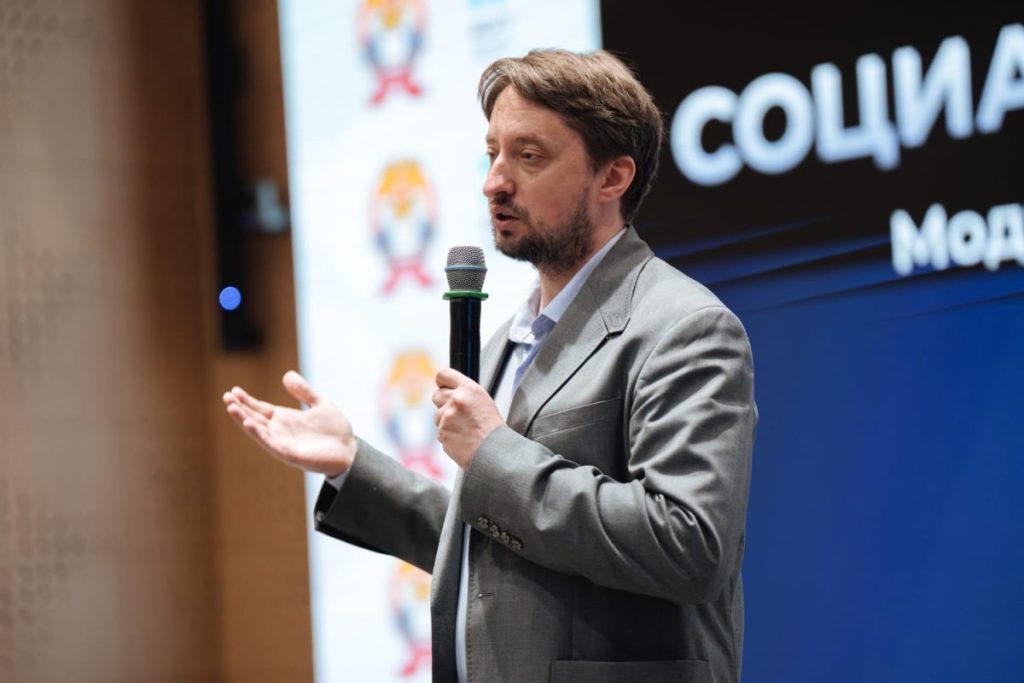
Outside Russia, the country’s geopolitical decisions are often interpreted primarily as a response to external threats or pressure. In your view, to what extent is Russia’s strategic choice actually determined by the evolution of its own political thought and intellectual traditions?
One of the strategic decisions of modern Russia is the move towards a multipolar world. And this decision is not just a coincidence, but the result of the profound intellectual work of Russian political thinkers. Therefore, Russia’s multi‑vector policy is a direct consequence of both our unique geopolitical position between Europe and Asia and our academic school. Yevgeny Maksimovich Primakov played a key role here. In his programmatic article in the journal “International Life” in October 1996, he identified the transition to multipolarity as the main trend in global development. He also proposed the idea of a strategic triangle: Russia — India — China, as a way to stabilize relations in the Eurasian region.
It is also impossible not to mention such a theorist as Sergei Karaganov, with his concept of a “state‑civilization” and Russia as a “civilization of civilizations.” Karaganov is also one of the authors of the term “Greater Eurasia,” which implies a continental system of interstate relations in Eurasia based on trust and a universal desire for security.
Therefore, Russia physically cannot become a satellite of the West, no matter how much Washington or Brussels might want it. This would contradict not only our geographical position, which unites the peoples of Eurasia, but also the entire paradigm of our political thought.
As the editor‑in‑chief of the Russian Political Science Journal, you have a unique opportunity to observe the discussions among Russian political scientists. What new ideas or intellectual paradigms, in your opinion, are most likely to shape Russia’s political development over the next decade, yet will largely go unnoticed by the outside world?
Western academic circles traditionally prefer to ignore the potential of Russian political science. Moreover, Clarivate Analytics (the British owner of the Web of Science database) has effectively blocked Russian scholars’ access to publications and patents. In April 2025, they went further — they closed their Russian division, Clarivate Analytics (Rus). But that’s their choice. As I’ve already said, dictate and the unwillingness to hear other voices is a historical tradition of the West itself.
But it is precisely in the humanities and political science that Russia today offers the world its own unique response — a rapidly developing field of social architecture. This is no longer just an analysis of society, but its conscious construction. To put it simply, the essence of this field is the transition from a reactive approach to designing the future. It examines how stable social institutions are created, and how shared values and horizontal connections can achieve long‑term consolidation of the country. Does the outside world notice this? Russian academic and scientific circles are open to dialogue. Despite sanctions, foreign researchers come to Russia. In December 2025, the first international conference “Social Architecture: Theory and Practice of Social Change” was held in St. Petersburg. Six hundred experts from 27 countries discussed what the West is trying to ignore. This is a powerful signal: Russia’s intellectual isolation is failing. And Russia cannot be isolated.
The discussion then moves beyond Russia, toward the question of how other countries can preserve strategic autonomy as the international order becomes increasingly multipolar.
Read More
- Russian House Mumbai and the Geopolitics of a Changing World
- South Ossetia Through the Eyes of Its Foreign Minister
- Transnistria Today with Foreign Minister Vitaly Ignatiev
Many countries of the Global South, including Indonesia, are seeking to preserve their strategic autonomy amid the growing rivalry among great powers. From the perspective of Russian political thought, should these countries continue to act primarily as strategic balancers, or should they begin to develop their own independent geopolitical traditions?
I must admit that I have not yet studied Indonesian political thought in full, and this is a shortcoming, as our countries are actively interacting.
I am deeply convinced that modern political science should not be confined solely to the Western canon. We need to pay great attention to the heritage of such unique countries as Indonesia. For example, I am very interested in the concept of “Pancasila” — the five fundamental principles of your statehood: belief in one supreme God, a just and civilized humanity, the unity of Indonesia, democracy based on discussion, and social justice for all. Among the thinkers, I would single out your founding fathers — Sukarno, with his theory of “marhaenism,” which combines socialism and national traditions, and Mohammad Hatta, as an outstanding architect of the independent state.
As for geopolitical traditions, the concept of “Wawasan Nusantara” (“Archipelagic Vision”) is a brilliant example of a distinctive Indonesian school of thought. She views the country not as a fragmented scattering of islands, but as a single entity: a combination of land, sea, air, and even the space above the archipelago. It seems to me that the potential for extrapolating this idea to global processes is enormous. Unlike the classical Western geopolitics of the last century, which rigidly opposed Land and Sea, your concept of “Wawasan Nusantara” inherently resolves this conflict. It offers the world a model of unity among all peoples on lands and oceans that are common to us all, where water bodies act as connecting arteries rather than barriers.
Some analysts argue that the Eurasian Charter represents a normative response to the fragmentation of the modern international order, emphasizing sovereignty, non‑interference, equality, and civilizational diversity. In your view, to what extent do these principles resonate with the spirit of the 1955 Bandung Conference and the Non‑Aligned Movement, despite the completely different geopolitical realities of today?
Indeed, the Eurasian Charter on Diversity and Multipolarity in the 21st century today serves as a normative response to the fragmentation of the world order and is a direct intellectual legacy of the 1955 Bandung Conference. If we turn to the text of the final Bandung declaration, we will see almost verbatim coincidences: it enshrines “non‑interference in internal affairs” and “equality of races and nations.” These same ideas formed the basis of the Non‑Aligned Movement. However, there is a fundamental difference in the context. In 1955, the focus was on the struggle of young states in Asia and Africa against classical colonialism and racism. Today’s realities are different: now the struggle is not against visible colonialists, but against invisible neocolonialism — the dictate of globalist institutions, sanctions pressure, and attempts to impose a single value model. Therefore, the spirit of Bandung is alive, but the object of resistance has changed. Back then, they fought for the right simply to be a state, while today Russia and the countries of the Global South are fighting for the right to be sovereign centers of power.
However, it is necessary to take into account that the finalization of the text of the Eurasian Charter on Diversity and Multipolarity in the 21st Century is planned to be completed by October 2027. The agreed version of the charter is expected to be submitted for consideration at the summit of Eurasian leaders, which is tentatively scheduled for October–November 2027 in Minsk. Therefore, the final text of the charter may be adjusted, but the spirit of Banduga will most likely be preserved in it.
Belarus has developed a roadmap to promote the Eurasian Charter ahead of discussions at the United Nations. What, in your view, would a truly inclusive Eurasian consultative mechanism look like? What principles, institutional mechanisms, and preliminary conditions are necessary for such a mechanism to gain broad legitimacy and international support?
Indeed, the official launch of negotiations on the development of the Eurasian Charter of Diversity and Multipolarity is scheduled at the UN for September 2026 in New York. This was recently stated by the Ambassador of Belarus to Russia, Yuri Seliverstov. The consultative mechanism has already been clearly presented and publicly outlined:
First, until September 2026, Belarus and Russia will be actively working — through briefings — to form a group of Eurasian states that will participate in the negotiation process.
Second, this group of states will officially launch the charter process in September 2026 in New York.
Thirdly, the first round of negotiations will take place by the end of 2026.
Fourthly, subsequent rounds will be held in the capitals of other interested states.
Fifthly, Belarus, as the initiator of the charter idea, has declared its readiness to chair the negotiation process. At the same time, Belarus has indicated the possibility of co‑chairing with another state that wishes to share this function with us.
Sixthly, Belarus and Russia are working on the initial text — the zero draft of the charter. This document will be sent to the partners after the process is launched in September.
The negotiation process is planned to be completed by autumn 2027, and the charter text will be submitted for consideration at the Eurasian leaders’ summit, which is scheduled to be held in Minsk in October–November 2027.
If all the planned actions are implemented, the document may gain broad legitimacy and international support.
The Eurasian Charter points toward a changing international order. But to understand Russia’s role in that transformation, it is also necessary to look at how Russia itself has changed.
In the 1990s, many observers believed that Russia had entered a period of irreversible decline. However, three decades later, it has once again become one of the main geopolitical players in the world. In addition to leadership and economic recovery, what intellectual, political, or institutional transformations, in your opinion, have contributed most to Russia’s revival?
Here, several initiatives can be identified that were implemented in the late 20th and early 21st centuries.
First, this was the formation of the “power vertical” in the early 2000s — the creation of federal districts, the reform of the Federation Council, and the alignment of regional legislation with federal law. Without the creation of a unified political and legal space, the country might not have preserved its unity.
Second, Russia deliberately moved away from blindly copying Western democratic standards, which had led to chaos in the 1990s. A national party system was established, and parties that received popular support received state funding. And thirdly, the Russian geopolitical process began to take into account not only the orientation towards the West but also other centers of the world. Russia began to support the creation of international structures that promote the development of a multipolar world and Eurasian integration — these are the SCO, the EAEU, the CSTO, and BRICS+.
Many people understand Russia primarily through the lens of war, sanctions, and geopolitical rivalry. In your opinion, if someone sincerely wants to understand Russia more comprehensively, which aspect is most often overlooked? Is it Russia’s intellectual traditions, historical experience, political values, or something else?
Russia has a vast heritage — Pushkin, Mendeleev, Gagarin… Yes, its military greatness is also immense. Russia and all the Soviet republics paid a price for the Victory over Nazism that the West cannot even imagine. Imagine what the world would have been like if the USSR hadn’t saved it during World War II? And now, the new generation of the West, whose grandfathers allowed Nazism to happen, wants revenge and a “strategic defeat” of Russia. Have they dared to aim for world domination? I’m afraid this crown will crush them.
But do you know what they completely overlook? Russia’s historical path. Russia built its state at the crossroads of Europe and Asia. They’ve always tried to conquer us — sometimes from the West, sometimes from the East. The yoke, world wars, the Cold War… In this context, it was understood that for peoples to survive, the state must be strong. Therefore, I am increasingly inclined to the concept of Russia as a state of civilizations — a state that protects different peoples, representatives of different civilizations, from destruction and gives different peoples the opportunity to develop. And in this understanding, Russia is the guarantor of security in the Eurasian space. Therefore, Eurasian security cannot exist without taking Russia’s position into account.
Over the past few years, Russia has faced unprecedented economic sanctions, diplomatic isolation, and geopolitical pressure from the West. Nevertheless, it has maintained a relatively high degree of political and social stability. In your view, what factors best explain this resilience?
Russia’s resilience to unprecedented pressure is not a matter of chance; it is the result of three fundamental factors: historical memory, economic sovereignty, and social cohesion.
First, our historical “immunity” to isolation has worked. Russia built a state with a strong foundation to withstand attempts to wear us down. As Russian President V. Putin noted, the West set a world record for the number of sanctions, but they turned out to be largely ineffective precisely because we were prepared for such a scenario.
Secondly, there is a strict macroeconomic policy and a real sector. Russia has resources, factories, and food, which creates the basis for economic sovereignty.
And thirdly, there is the social factor. At the moment of an existential threat, Russian society demonstrated the highest level of consolidation. When we are under pressure from all sides, Russians do not break but gather into a fist. This cohesion has become Russia’s main shield.
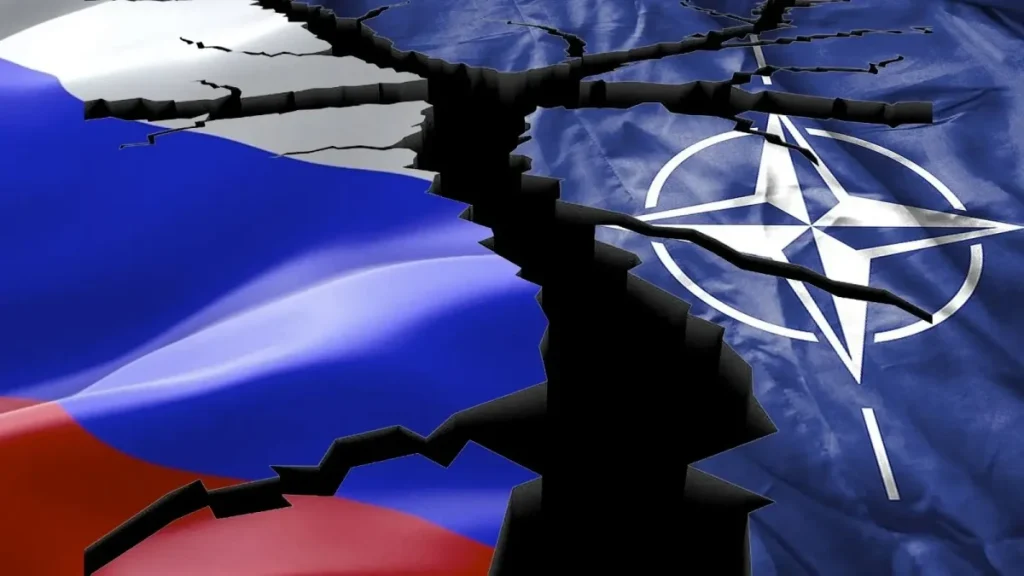
Relations between Russia and NATO, as well as the European Union, have continued to deteriorate in recent years, while relations with the United States have seemed relatively more stable under the current administration of President Trump. At the same time, several NATO officials have warned of a possible direct confrontation with Russia in the coming years. How are these events understood from the perspective of Russian political thought, and what consequences do they have for Russia’s broader vision of European security?
In recent years, a fundamental shift has been observed in the architecture of European security. The European Union is rapidly transforming into a military‑political bloc in the image and likeness of NATO. For example, the EU plans to mobilize up to 800 billion euros to strengthen the defence sector as part of the “Rearm Europe” programme. And this is no longer just rhetoric — it’s the real militarisation of the continent. Paris is promoting the idea of a pan‑European “nuclear umbrella”, while London is returning to its traditional anti‑Russian stance.
In 1975, a unique consensus was signed in Helsinki: a de‑escalation of tensions in exchange for recognition of the post‑war realities in Europe. Today, this “Helsinki spirit” has been completely destroyed. The European dialogue, which assumed respect for the security of all participants without exception, has been sacrificed to the narrow corporate interests of the Euro‑bureaucracy. The same countries that for decades demanded that Moscow respect human rights and promote openness have themselves turned into a closed media and political bloc where any dissent is suppressed and foreign policy is reduced to serving the interests of NATO’s military‑industrial complex.
At the same time, the thesis that the escalation of fear of an “imminent war” serves only as a justification for increasing budget expenditures on the defense of Western countries is merely an oversimplification. However, to reduce everything solely to lobbying by the military‑industrial complex would be an oversimplification. For Russia, the response is a necessary measure to ensure its sovereignty. Russia is being forced to respond in kind in order to neutralize the real threats near our borders. And yes, part of the Western strategy did indeed involve an attempt to force Russia to focus exclusively on the military budget, thereby reducing social spending and provoking internal tension. This tactic failed: the Russian economy adapted, maintaining macroeconomic stability despite increased spending on security.
As for relations with the United States, their relative stabilization under the Trump administration can be attributed to Washington’s pragmatism. American policy has shifted its focus to the Middle East and to the global containment of China. However, at the same time, American weapons, albeit via Europe, are still reaching Ukraine, thereby prolonging the conflict. Therefore, it would be incorrect to say that the Trump administration has become more pro‑Russian. The US is acting in its own national interests and in the interests of American corporations. The conflict in Ukraine and the conflict with Iran will allow American oil and gas companies to generate super‑profits thanks to new consumers both in Europe and in Asia. I won’t name the amounts — they are available online; anyone interested can take a look.
It’s important to understand a few points here:
First. There is no longer any direct interaction between Russia and NATO. In the alliance’s documents, Russia is officially defined as a “direct and long‑term threat,” so any cooperation is ruled out by definition.
Second. Russia has stopped viewing the EU as a negotiable entity. Unfortunately, there is no dialogue. A return to normal dialogue with Europe is possible only after the replacement of the elites there with nationally oriented ones who will be able to restore the subjecthood of their states instead of transferring it to an unaccountable Brussels.
The third. Russia is a nuclear power, and any direct aggression against it is guaranteed to lead to catastrophic consequences. Does the world need to bring the situation to this point? Obviously not. At the same time, Russia does not threaten anyone. But NATO has moved closer to Russia’s borders.
Therefore, Russia is forced to respond to the new realities that have developed with European security.
And the last thing I would like to mention is: Today, it is obvious that the old security architecture, created in the era of the bipolar world or Western domination, has finally exhausted itself. She failed to prevent conflicts and only perpetuates inequality.
The West’s attempts to ensure its own security by weakening Russia and containing China have led the world to a dangerous dead end. The old institutions, above all NATO, do not guarantee security; unfortunately, on the contrary, they create new threats.
Therefore, the discussion should not be just about new agreements, but about changing the very paradigm. A functioning mechanism for de‑escalation is needed. And it is likely that a new treaty on global security and new international institutions guaranteeing the implementation of these agreements are needed.
A new global security agreement should guarantee the rejection of unilateral sanctions, the protection of critical infrastructure, and respect for civilizational diversity. At the same time, without the participation of Russia, China, India, and other BRICS countries, any document on global security will remain a fiction. Therefore, dialogue is necessary, and such a dialogue can probably be initiated in the format of expert and scientific discussions, which may subsequently encourage diplomats and politicians. ***
Explore the Series
- Part 1 — Russian Political Thought Behind Strategic Continuity
- Part 2 — How Ideas Shape Russian Political Strategy
- Part 3 — Indonesia and the Eurasian Charter in a Changing International Order
- Part 4 — Russia’s Resilience and the Return of a Major Geopolitical Power
- Part 5 — Russia, NATO and the Risk of a Wider European War
- Full Interview — Inside Russia’s Political Mind